
Plastic Free July is usually framed as a challenge for the planet. Less waste. Less landfill. Less pollution.
But for many households, the conversation is becoming far more personal than that.
Plastic is not just something we throw away. It is something we live with every single day. It lines our food packaging, fills our cupboards, wraps our deliveries, sits in our bathrooms, and sheds from the synthetic fabrics we wear and wash.
Before you even leave the house in the morning, you’ve probably already touched plastic dozens of times without thinking about it. And once you start noticing it, it is everywhere.
That is why more families are starting to rethink plastic, not only because of environmental concerns, but because they want a low-tox home that feels cleaner, calmer, and less overloaded with synthetic materials.
Creating a plastic-free home is not just about what leaves the house in the bin. It is also about what constantly comes into the home, and what we are exposed to every day without even realising.
Is Plastic Really That Bad For You?
It depends, but it’s definitely not a completely harmless part of modern life. Plastic itself is a material, but many plastics contain additives such as plasticisers, stabilisers, dyes, and flame retardants that help give products flexibility, colour, softness, or durability.
Some of these chemicals have been studied for their potential to leach into food, water, dust, and surrounding environments over time, particularly when exposed to heat, sunlight, friction, or repeated use.
Then there is the issue of breakdown. Plastic does not simply disappear. Over time, it slowly breaks apart into smaller and smaller fragments, eventually becoming microplastics. These tiny particles are now being found in waterways, food chains, household dust, indoor air, and even human tissue.
That is alarming because, realistically, most people do not expect synthetic plastic particles to become part of their everyday environment, let alone their bodies.
At the same time, this conversation is not about fear or panic. Nobody needs to throw out their entire house overnight. The concern is not that every exposure is automatically dangerous. It is the sheer scale and frequency of contact modern households now have with plastic across hundreds of everyday items and environments.
What are Microplastics?
Microplastics are tiny plastic particles generally smaller than 5 millimetres in size, roughly the size of a sesame seed. Many are far smaller than that, tiny enough to float through the air completely unnoticed.
Some microplastics are intentionally manufactured for industrial use, but many form when larger plastic items slowly break down over time through heat, friction, sunlight, washing, or general wear and tear.
Every day plastic items do not disappear when they age. They fragment. Think about:
-
-
Plastic food containers scratched from repeated use
-
Plastic chopping boards and utensils breaking down after each use
-
Plastic drinkware and water bottles breaking down into beverages
-
Synthetic clothing fibres are shedding in the washing machine
-
Plastic packaging breaking down in household waste
-
Non-stick coatings and synthetic materials wearing away gradually
-
Dust created from heavily used plastic household items
-
And because modern homes contain so many synthetic materials, microplastics are now commonly found indoors, not just outdoors. Researchers have detected them in household dust, indoor air, drinking water, and food packaging.
Which means this is no longer only an environmental issue. It is also a home environment conversation.
How Are We Getting Microplastics into Our Bodies?
Researchers are still studying the full long-term picture, but there are several common ways people are exposed to microplastics in everyday life.
We can ingest them through food and water, particularly where plastic packaging, containers, chopping boards or utensil contamination is involved.
We can inhale them through household dust and airborne synthetic fibres, especially indoors, where synthetic rugs, furnishings, clothing, and packaging are constantly shedding tiny particles into the air. Even simple things like opening plastic packaging or tumble drying synthetic clothes can release fibres into the environment around us.
And while skin absorption is considered less significant than inhalation or ingestion, researchers are continuing to study how ongoing contact with synthetic materials and chemical additives may interact with the body over time.
The important thing to understand is that exposure rarely comes from one dramatic source. It is the cumulative effect of lots of small, everyday interactions.
That is why more families are focusing less on perfection and more on reducing unnecessary plastic, where it feels realistic and achievable.
Easy Ways to Reduce Plastic at Home
The good news is you do not need to throw everything away and start from scratch. Honestly, that would probably be more stressful and more wasteful anyway. The most sustainable changes are usually the small ones that naturally fit into everyday life and actually stick long-term.
A simple approach is to start with the products you use and replace most often, then swap them gradually as they run out.
Some realistic ways to create a more plastic-free home include:
-
-
Switching from plastic packaging and containers to reusable glass or stainless steel containers
-
Choosing natural fibre clothing where possible to reduce synthetic fibre shedding.
-
Switching to stainless steel or glass water bottles.
-
Invest in a reusable coffee cup for your takeaway coffee.
-
Swapping the plastic chopping board for a wooden, bamboo or glass board.
-
Buying pantry staples in bulk to reduce packaging waste
-
Avoid plastic-packaged household and cleaning products and opt for refillable glass bottles.
-
Using reusable produce bags
-
Choosing low-tox bathroom and cleaning products with less plastic packaging, like shampoo and conditioner bars, and body soap.
-
Swapping cling wrap for reusable alternatives
-
One of the most overlooked areas is everyday household paper products. Toilet paper, tissues, and paper towels are used constantly, yet many are heavily processed and wrapped in virgin plastic packaging that is used briefly before eventually breaking down into smaller plastic fragments over time.
Many households in Australia are now choosing bamboo toilet paper as a lower-plastic alternative for the home that reduces unnecessary packaging and harsh chemical processing while still feeling soft and practical to use. It is a small switch, but one that removes a surprisingly consistent source of disposable plastic from the home.
If you’re looking for more realistic ways to reduce plastic at home, here are 11 Easy Swaps Towards a Zero Waste Kitchen that are simple and low-effort changes to cut down on waste and plastic use at home.
Why are More Families Choosing Plastic-Free Products?
For many households, it starts with environmental awareness, but it often grows into something more personal.
A plastic-free home tends to feel simpler. Less packaging coming in means less to unpack, sort, store, and throw away. Fewer synthetic materials can also mean fewer harsh additives and less visual clutter throughout the home.
Over time, people start noticing that reducing plastic often aligns naturally with creating a calmer, more intentional environment overall. Less stuff coming in usually means less chaos piling up in drawers, cupboards, and under the kitchen sink.
And importantly, most families are not aiming for perfection. They are simply looking for realistic ways to reduce the constant flow of disposable materials into spaces where they eat, sleep, relax, and raise their children.
Small changes are usually what last because they feel manageable.
A Plastic-Free Home Starts With What You Already Use
A lower-tox, more conscious home is not built overnight. It happens through small, repeated choices over time. Just ask one simple question:
Is there a simpler version of this that brings less plastic into my home?
Often, there is.
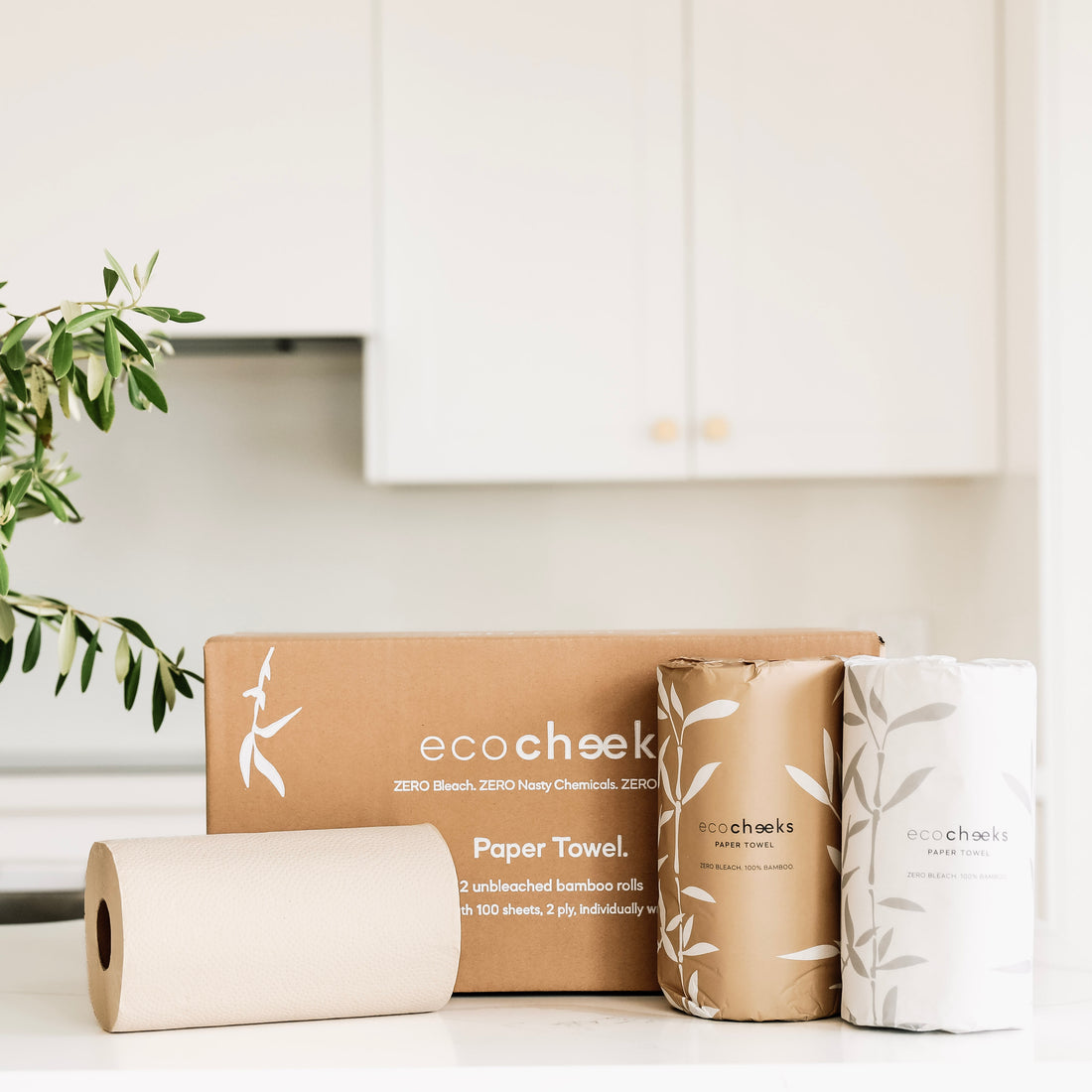
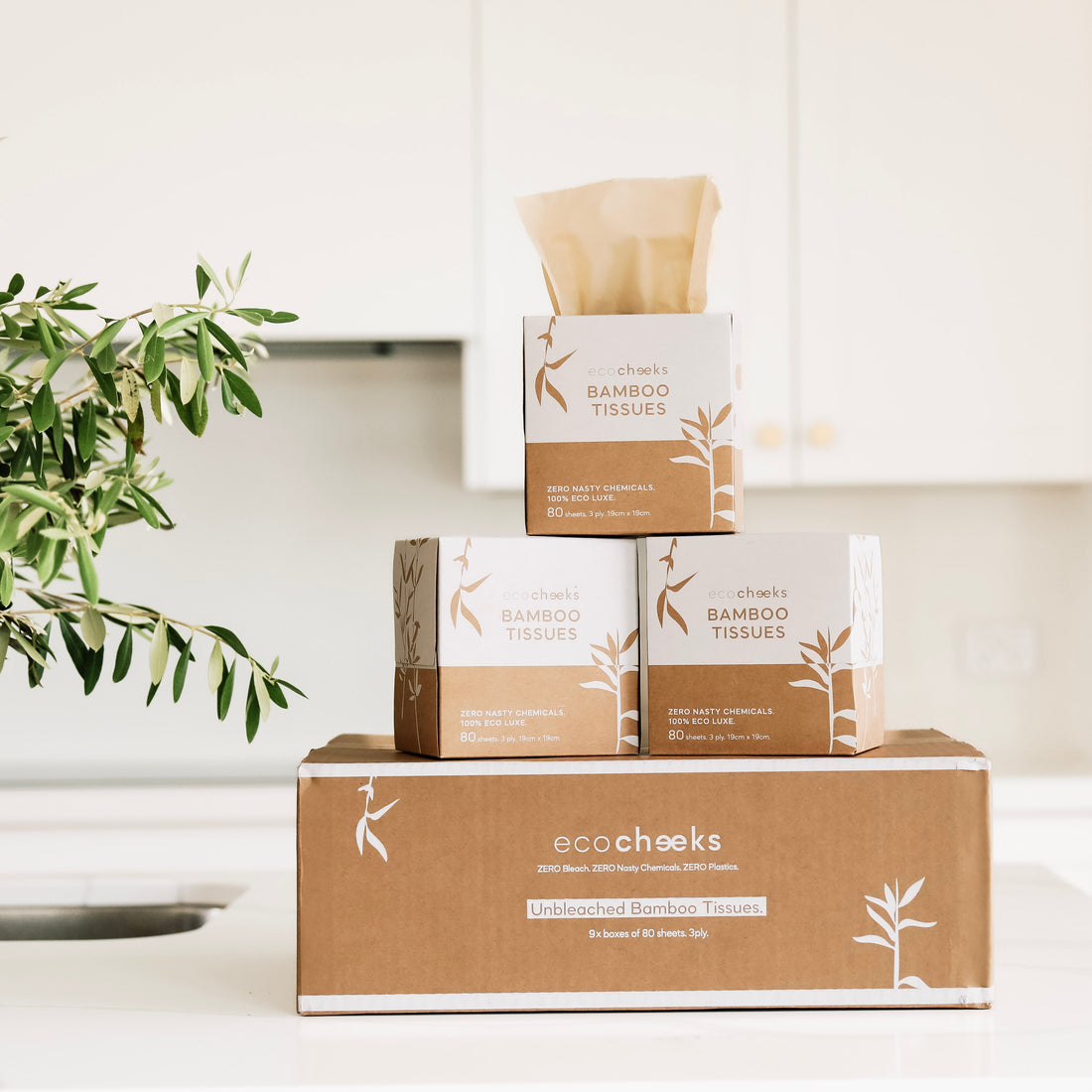
At Eco Cheeks, our 100% unbleached bamboo toilet paper, paper towels, and tissues bundles are designed to support a more plastic-free home and low-tox home lifestyle, while being completely free from plastic packaging within the product range itself.
Plastic Free July is simply a reminder to pay attention to what is already around us. The things we buy automatically. The products we replace constantly. The packaging quietly builds up in cupboards, drawers, and bins without us even noticing.
Creating a more conscious home does not usually happen through one huge lifestyle overhaul. It usually starts with one small swap, then another, until eventually your home just feels lighter, simpler, and a bit better to live in.