
Close your eyes and picture a clean home.
There's a good chance your brain just conjured up a scent along with the image. Maybe it's the sharp citrus of a freshly sprayed bench. The powdery softness of clean laundry. The piney hit of a bathroom that's just been scrubbed.
We don't just imagine cleanliness. We smell it.
But here's a question worth sitting with: where did that association come from?
Is a lemon-scented kitchen actually cleaner than an unscented one? Or have we simply been taught to connect fragrance with cleanliness so thoroughly and for so long that we've stopped questioning it altogether?
Why Do We Associate Fragrance With Cleanliness?
The honest answer is that associating fragrance with cleanliness is largely a marketing invention, and a remarkably effective one at that.
For most of human history, clean simply meant the absence of dirt, bacteria, and disease. It had no particular smell. In fact, many of the earliest cleaning agents, like carbolic acid, lye soap, and vinegar solutions, smelled harsh, clinical, or just plain unpleasant.
Clean wasn't supposed to smell good. It was just supposed to work.
That started to shift in the mid-20th century when consumer goods companies began adding fragrance to household cleaning products, laundry detergents, and personal care items.
The reasoning was partly practical, masking the chemical smell of the active ingredients, and partly psychological. Fragrance triggered an emotional response. A product that smelled fresh felt more effective, more trustworthy, more premium. The scent became the shorthand for the result, and the industry ran with it.
Decades of advertising reinforced that connection. Lemon means kitchen-clean. Lavender means laundry-fresh. Pine means bathroom-done. We absorbed those associations so completely that they now feel like common sense rather than what they actually are: a very successful, very long-running branding strategy.
And this is where curiosity becomes genuinely useful.
Does Fragrance Mean Something Is Cleaner?
No. Fragrance is almost always added after the fact. It has nothing to do with a product's cleaning or sanitising function.
A fragrance-free surface spray that removes bacteria is doing the same job as its lemon-scented equivalent. The artificial lemon note is there for you, not for the germs.
The same logic applies to personal care products. Fragrance-free shampoo cleans your hair just as thoroughly as a heavily scented one. Unscented laundry detergent removes stains with the same efficiency. Fragrance-free toilet paper is just as hygienic as a tissue that smells like aloe and chamomile.
A quick caveat for the essential oil fans. Some pure essential oils, like tea tree and eucalyptus, do genuinely contribute antibacterial properties, so a product scented with the real thing can do more than just smell nice.
But synthetic fragrance added to a conventional cleaning spray or tissue? That's purely cosmetic. It's added for the experience, not the efficacy.
The point to note, artificial scent isn't doing the cleaning. It's doing the convincing.
How Did Scented Products Become the Norm?
It happened gradually, and then happened everywhere at once. By the 1970s and 80s, fragrance had become so standard in household and personal care products that unscented versions started to feel like the exception rather than the rule.
Choosing a fragrance-free product began to carry an unspoken implication that something was missing, that it was the budget option, the clinical option, the option for people with problems.
The category of fragrance-free products existed, but it was largely positioned as a niche for people with allergies or sensitivities rather than a straightforward choice for anyone who simply didn't want fragrance in their home. The norm had been established, and stepping outside it required a conscious decision.
What's shifted more recently is the growing awareness that fragrance, particularly synthetic fragrance, isn't just a neutral addition. It's a category of ingredients, sometimes hundreds of individual chemical compounds hiding under a single word on an ingredient list, with a range of effects that many consumers are only now beginning to look into.
If that last part made you raise an eyebrow, we go much deeper on exactly What's Really Hiding in Your Everyday Products. Spoiler: It’s not always as pretty as it smells.
Can a Product Work Without a Scent?
Absolutely, and in many cases it works better! A fragrance-free cleaning product isn't a compromised version of a scented one. It's the same product without an ingredient that wasn't contributing to performance in the first place.
The very same goes for personal care. Fragrance-free moisturiser, fragrance-free tissues, fragrance-free laundry detergent. None of these is a lesser product. They're just products that have stopped outsourcing the feeling of cleanliness to a synthetic scent.
There's also something worth noticing when you remove fragrance from your home environment. The artificial baseline disappears, and you start to notice what things actually smell like, which turns out to be not very much at all.
A clean bench doesn't have a strong smell. Clean laundry has a faint, neutral warmth. Bamboo toilet paper that hasn't been fragranced or bleached doesn't smell of chemicals or artificial freshness. It just barely smells like paper.
That shift can feel strange at first, because we've been conditioned to read "no strong smell" as "not clean enough." But that's the conditioning talking, not the reality.
What Does a Low Tox Home Actually Smell Like?
Moving toward a low tox home doesn't mean your house smells of nothing. It means the scents that are present are either natural, like from your morning coffee, the fruit bowl, the garden coming through an open window, or simply an oil diffuser with your favourite essential oils. It means you're not layering synthetic fragrance on top of synthetic fragrance in every room, every day.
Non toxic home products don't need to smell like anything in particular to do their job. A bamboo paper towel that absorbed a spill hasn't failed because it didn't leave a lemon scent behind. An unscented surface spray that removes bacteria from your bench has done exactly what it was supposed to do, quietly and without fanfare.
The absence of fragrance isn't a gap. It's just the absence of something that was never necessary in the first place.
Does Clean Really Have a Smell?
Real cleanliness is the absence of what shouldn't be there. Dirt, bacteria, residue, chemical buildup. It doesn't require a scent to prove it's happened.
The fragrance came later, added by industries that understood, correctly, that smell is one of our most emotionally powerful senses. If they could make something smell clean, we would feel it was clean, and we would keep buying it.
The point is simply to separate the feeling from the function. To notice when fragrance is doing a job that cleanliness should be doing on its own.
Eco Cheeks Products Don't Need to Smell Clean. They Just Are.
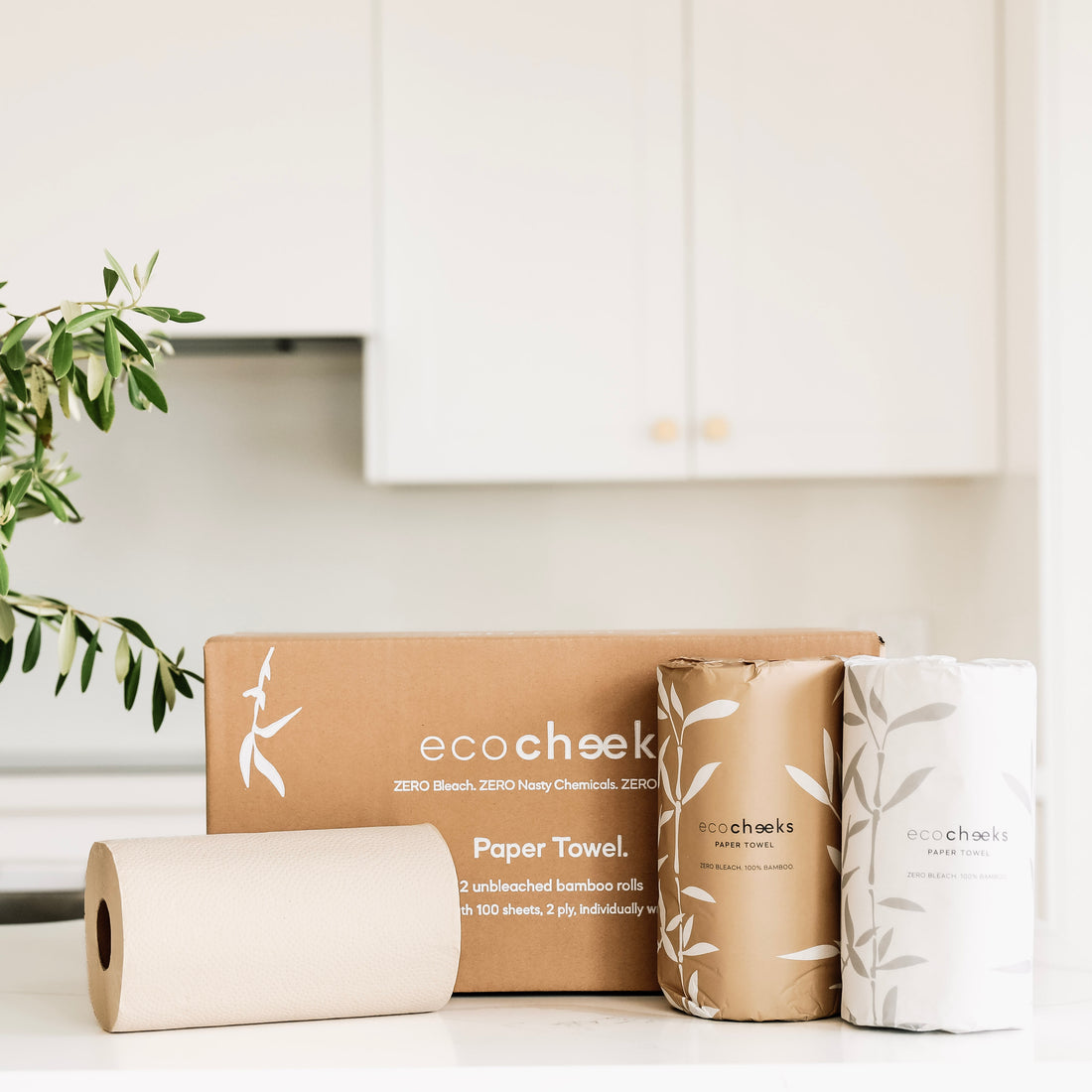
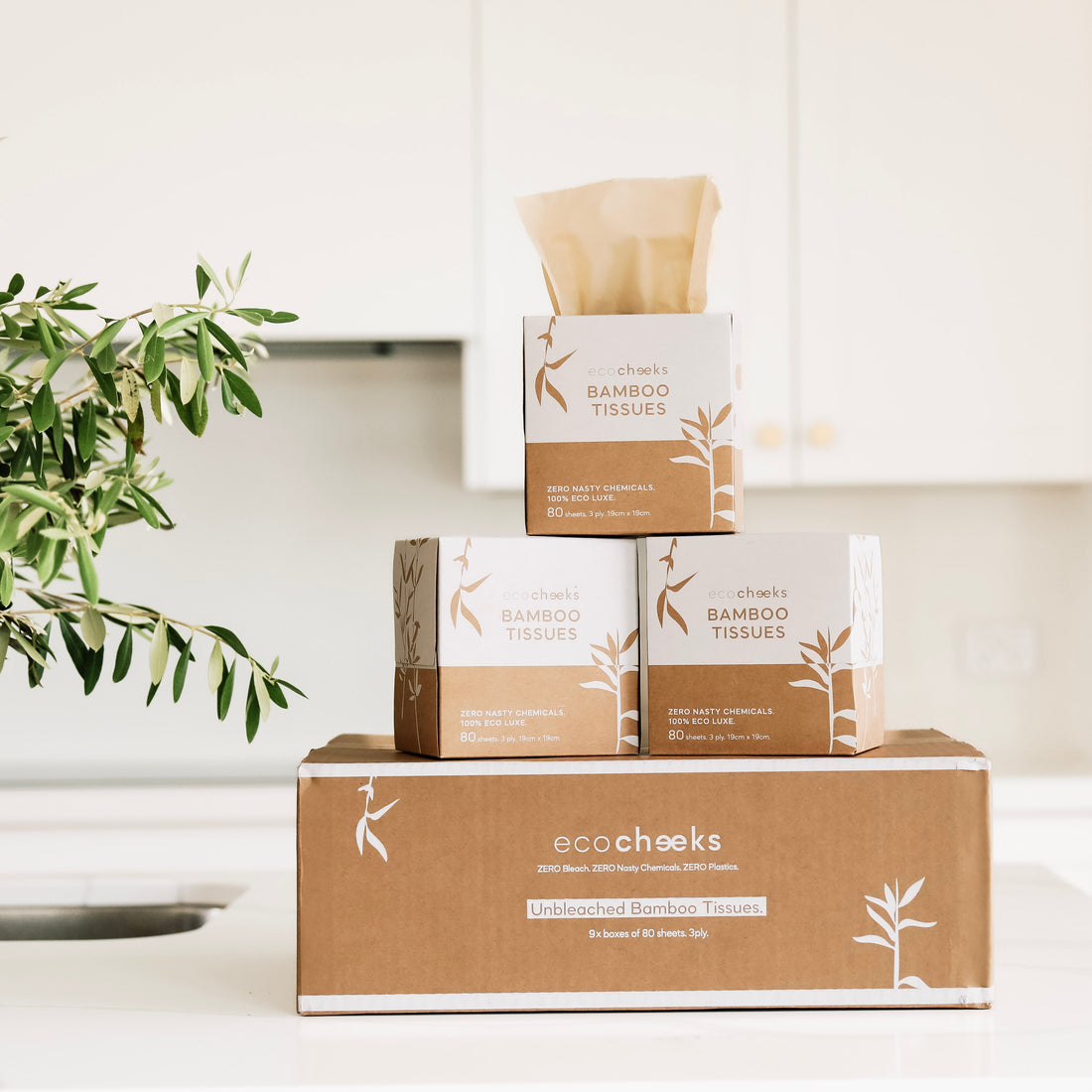
Eco Cheeks toilet paper, tissues, and paper towels start with 100% bamboo, one of the most sustainable and naturally clean raw materials on the planet.
They're unbleached, so there's no chlorine residue sitting against your skin.
They're plastic-free, because unnecessary packaging was never part of the plan.
And on top of all of that, they're completely fragrance-free. No synthetic scents, no nasty masking chemicals, no artificial freshness. Not because fragrance-free is a trend. But because a product this clean simply doesn't need one.
Our range of fragrance free bamboo toilet paper, paper towels, and tissue boxes are designed for households that want genuinely cleaner products, not just products that smell that way.