
Here's something most of us have never stopped to think about: Trees don’t grow white, so toilet paper isn’t naturally white.
Conventional toilet paper is typically made from wood pulp, usually a mix of softwoods like pine and hardwoods like eucalyptus, broken down into fibres through a pulping process. In its raw form, that pulp is a natural brown or tan colour, similar to what you'd see in unbleached paper bags or recycled cardboard.
Bamboo toilet paper starts from a similar place, with bamboo fibres naturally falling somewhere between beige and light brown before any processing.
And yet somewhere along the way, bright white became so synonymous with clean, hygienic, and premium that the idea of using anything else started to feel a little wrong.
But why? When did white become the standard, and was it ever really about hygiene in the first place?
Why Is Toilet Paper Bleached White?
The short answer is that it's bleached to make it white, and it's made white because consumers came to expect it.
The longer answer starts earlier than you might think. Early commercial toilet paper in the late 1800s and early 1900s was closer to its natural colour, an off-white or light brown, depending on the raw materials used. Bleaching existed as a process, but it wasn't yet standard practice across the industry.
This changed as paper manufacturing scaled up through the 20th century. Bleaching became more accessible and more affordable, and the result was a noticeably brighter, whiter product. Manufacturers quickly realised that consumers responded to it. White felt cleaner. White felt newer. White felt premium.
Bleaching itself is a multi-step chemical process. Conventional toilet paper is most commonly bleached using chlorine-based compounds, which whiten the pulp but also generate a chemical byproduct called Dioxin in the process. Elemental chlorine-free and totally chlorine-free methods exist and are marginally safer alternatives, but the end goal is still the same. A white finished product.
None of this is necessary for the toilet paper to function.
Bleaching doesn't make toilet paper softer, stronger, or more absorbent. It doesn't make it more hygienic either. It makes it white. And white, as we've established, makes it feel like all of those things even when it isn't contributing to any of them.
The Psychology of the Colour White
The colour white has long carried associations of purity, cleanliness, and sterility across cultures. Hospitals are white. Lab coats are white. Wedding dresses are white. The colour triggers a deeply conditioned response that something is fresh, clean, and safe.
Consumer goods companies understood this and leaned into it. Bright white toilet paper, bright white tissues, bright white paper towels all signalled the same thing: this is clean. This is what you want touching your skin.
The association was so powerful that it became self-reinforcing. White toilet paper looked cleaner, so consumers bought more of it, so manufacturers made more of it, so white became the industry standard.
The reasoning was circular, but the outcome was total.
Does White Toilet Paper Mean Higher Quality?
The honest answer is no, not inherently. Quality in toilet paper comes down to softness, strength, and how it's made. Those properties come from the raw material and the manufacturing process, not the colour.
A piece of toilet paper doesn't become softer or more durable because it's been bleached white.
What bleaching does affect is perception. White toilet paper feels more premium because we've been conditioned to associate white with quality. It's the same psychological mechanism that makes us reach for the whitest teeth-whitening toothpaste or the brightest white sheets. The colour has become a proxy for quality even when it has no functional relationship to it.
Does Toilet Paper Need to Be White to Be Hygienic?
No. Hygiene has nothing to do with colour. A piece of toilet paper is hygienic if it's produced cleanly, free from harmful residues, and does its job effectively. The colour of the finished product is entirely separate from any of those things.
Unbleached toilet paper isn't less hygienic than bleached white toilet paper. It's simply a different colour, because no chemical process has been used to change it.
In fact, there's an argument that unbleached toilet paper is the cleaner option in terms of what's sitting on the paper itself. Bleaching processes, particularly chlorine-based ones, can leave chemical residues in the finished product. Skipping the bleaching step entirely means skipping those residues, too.
Is Unbleached Toilet Paper Safe?
Yes, completely! Unbleached toilet paper is simply toilet paper that hasn't been put through a chemically intensive whitening process. The bamboo or paper fibres are still processed and manufactured to the same standard. The only thing missing is the step that turns them white.
If anything, the absence of bleaching is a point in its favour. There are no chlorine compounds involved, no chemical whitening agents, and no synthetic brighteners.
With unbleached toilet paper, what you're left with is a product closer to its natural state, which for bamboo means a soft, naturally beige paper that's gentle on skin and free from unnecessary chemical processing.
Questioning the Norm
When starting Eco Cheeks, one of the first questions asked was a simple one: does this toilet paper actually need to be white? The answer was no.
Bamboo fibres are naturally soft and strong. They don't need heavy processing to perform well. And they certainly don't need bleaching to become hygienic.
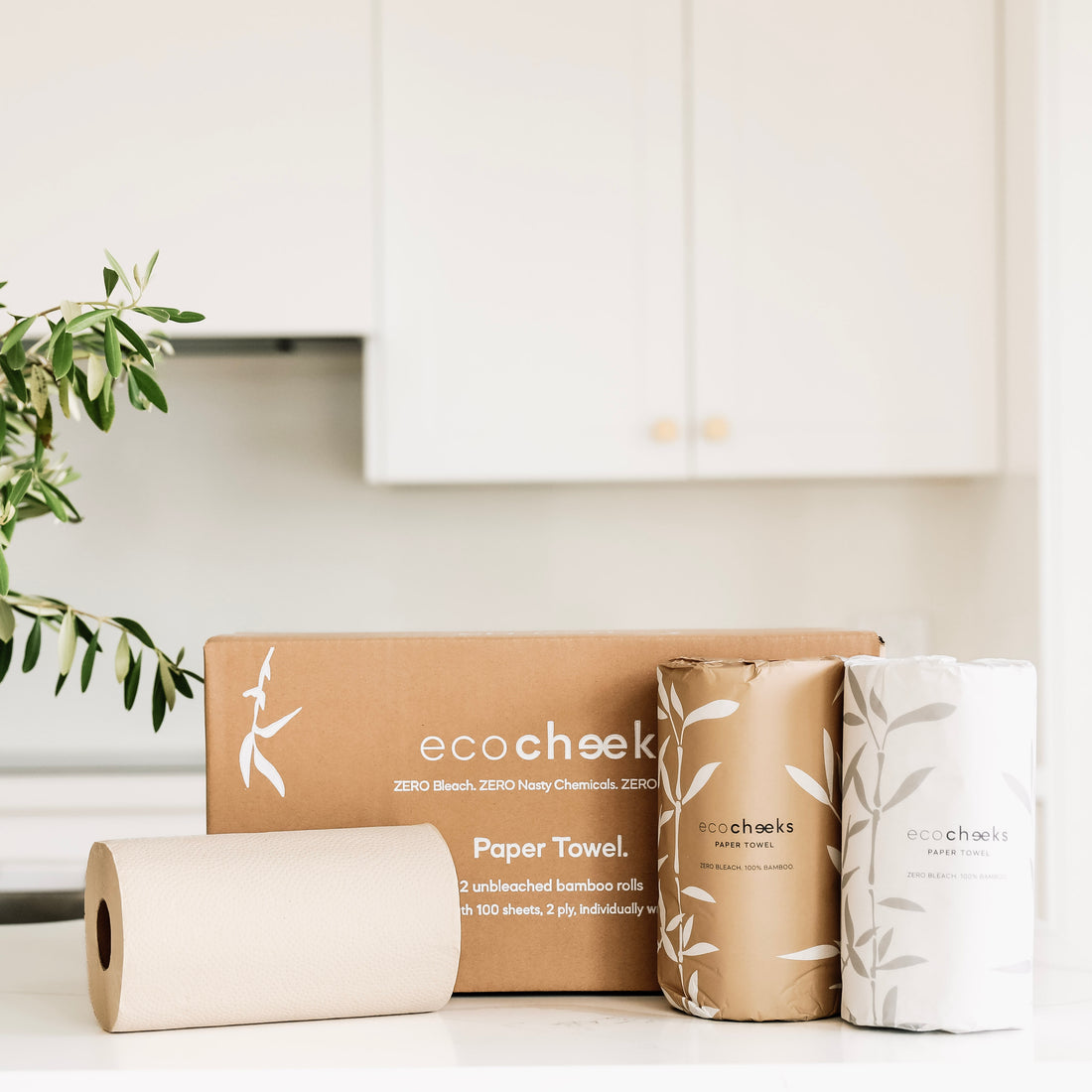
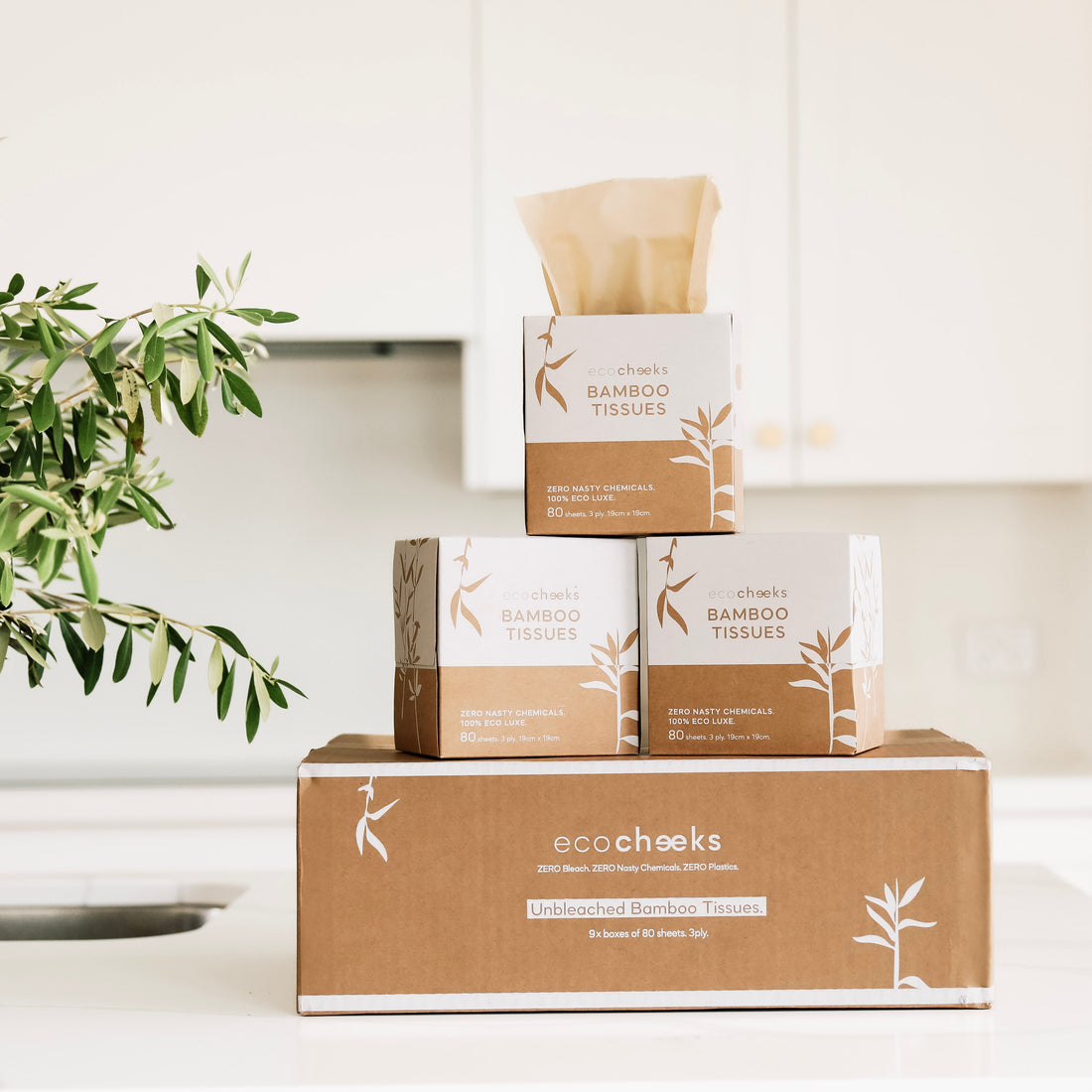
The beige colour of Eco Cheeks toilet paper isn't a compromise or a limitation. It's what bamboo actually looks like when you make it into toilet paper without putting it through a nasty chemical whitening process.
Choosing to leave it unbleached wasn't about being different for the sake of it. It was about questioning whether a step that added harsh and nasty chemicals and served no functional purpose was actually necessary. The answer was straightforward. It wasn't.
We go into a lot more detail on exactly what bleach-free means across our entire range, and why it matters, in Everything is Bleach-Free: How Eco Cheeks Keeps It Natural.
Why Eco Cheeks Chose to Leave It Beige
White toilet paper became the industry standard because consumers were conditioned to associate white with cleanliness, purity, and quality. That association is understandable. It's deeply ingrained. And it was never really challenged because the industry had no reason to challenge it.
But if toilet paper is used once and flushed away, does it actually need to be bright white to do its job? Does the colour make it softer, stronger, or more hygienic?
It doesn't. It just makes it look the way we've been taught clean should look.
Eco Cheeks bamboo toilet paper is unbleached, plastic-free, and fragrance-free. Soft, strong, and genuinely better for your skin and the planet, just not white. And once you understand why it isn't, the beige starts to look a lot more like the sensible choice.
Don't just take our word for it. Grab a Roll Me 6 sample pack here and see how unbleached bamboo actually feels, no bulk order required. Or if you'd rather see it in person first, find your nearest Eco Cheeks stockist here.