
Think about the last meal you made at home. Maybe the leftovers went into a plastic container while they were still warm. Maybe the chicken stock came out of a pouch, the tomatoes came out of a tin, and the cheese got rewrapped in cling film before it went back in the fridge.
None of it feels like a big deal. It's just how most of our kitchens work.
But a growing body of research suggests that some of the chemicals used in everyday plastics can move from packaging and kitchenware into our food, and from there into our bodies.
Some of those chemicals are known as hormone-disrupting chemicals, and they're worth understanding.
This isn't about panic, or about throwing out every container you own by the weekend. It's about knowing where these chemicals tend to show up, and which small swaps make the biggest difference.
To help us unpack it, we spoke with Alexx Stuart, founder of Low Tox Life. Alexx launched Low Tox Life in 2009 to help people make more informed choices for their health and the planet. For more than 15 years she's developed courses, books and resources that turn that awareness into practical, everyday change, rooted in scientific evidence. She has also spent a decade hosting the Low Tox Life podcast, interviewing more than 500 doctors, scientists and pioneers.
We Asked Alexx Stuart: Is Your Kitchen Affecting Your Hormones?
1. We often hear about ‘hormone-disrupting chemicals’, but what does that actually mean? How can they interfere with our hormones, and what can that mean for our health?
Hormone-disrupting chemicals can block or mimic natural hormone signalling in our bodies. As you can imagine, that can be very confusing for our bodies.
Phthalates, a plasticiser family of chemicals, have been shown to lower testosterone, reduce sperm motility, and cause a variety of fertility issues for both men and women. They've also been shown to change the way in which sex organs develop in utero, especially in males. Professor Shana Swan's seminal research is well worth reading.
Another well-researched hormone disruptor is the bisphenol family of chemicals. BPA is well known, and often, when we see BPA-free on a plastic container, bottle, or pantry jar, the chemical used to replace it is an equally, if not more, potent hormone disruptor: BPS.
BPS has been shown to mimic oestrogen in our bodies, binding to hormone receptors. It's also known to affect thyroid hormones, promote fat cell growth, and affect our immune system by driving overactivity of immune cells, which contributes to increased allergic responses. Bad news, right?
2. When it comes to our kitchens, what are the biggest everyday sources of hormone-disrupting chemicals that you think we need be paying attention to?
In our kitchens, phthalates show up in snap-lock bags, plastic wrap, and soft plastic food packaging.
BPA and BPS can be found in plastic utensils, plastic containers and jars, takeaway containers and cups, all plastic drink bottles and tin-can lining for things like legumes and tomato products.
3. Does hot or cold temperatures make a difference? Should we be more concerned about certain materials when they're in contact with food or drinks of certain temperatures?
Yes, hot temperatures definitely increase the amount of leaching that a plastic will do into the food that goes into that container.
If you absolutely have to use plastics in your pantry (i.e., you can't swap right now or you feel it's safer with small children), please fill plastic containers only once the food is cold to reduce the risk of leaching.
Definitely avoid any products that suggest you 'cook in the plastic bag' or 'submerge the plastic bag in boiling water' to prepare the food.
4. We all grew up with plastics, and hear daily that they're not good for us or the environment. If someone isn't ready to remove all plastics, where would you prioritise reducing plastic exposure first?
Promise me you will do this rather than panic: Celebrate your swaps. Being overwhelmed by 'how much there is to swap' often leads to a lack of action. Bit by bit you'll get there at your pace, and every change is awesome.
Also? Write to your local MP and say you're outraged that these things are allowed in everyday household items and food packaging, and what is their stance on it!? Nothing changes if we expect telepathy from our elected officials about what matters to us.
So, onto some simple swaps.
Swap:
-
Plastic cooking utensils -> for wooden or stainless steel utensils.
-
Plastic boards -> for solid hardwood boards - preferably made from one piece rather than reconstituted or from strips glued back with resins and adhesives we can't trace.
-
Plastic pouches of chicken or vegetable stock -> either learn to make it (super easy and very low cost. Recipe here), or switch to concentrates sold in jars.
-
Soft plastic pouch yoghurts/kids foods -> ditch them and replace them with small stainless containers for kids' snacks and meals on the go.
-
Plastic wrap -> switch to beeswax wrap or Sugarwrap (Bio-PE from sugarcane) for wraps and freezer bags that feel the same.
-
Plastic-wrapped produce -> for farmer's market or non-plastic-wrapped produce.
Forget achieving perfection. Just do the best you can. I still buy organic berries in plastic pouches. I still get takeaway sometimes in plastic when I forget my containers.
Progress over perfection, always.
5. How do we know it will make a difference to the levels in our bodies to make these changes?
The good news is that scientists worldwide are showing, through different studies (including one done here at the University of Western Australia earlier this year, 2026), that reducing our exposure to plastics dramatically lowers the level of hormone-disrupting chemicals in our bodies.
In fact, one group of 211 participants in that study was able to reduce their phthalates by 44% and BPA by 50% in just 1 week of a controlled experiment: replacing things like chopping boards that were made of plastic with wooden chopping boards and having their food delivered, especially for the research study, by farms and producers who did not use any plastic in any part of their food production or packaging.
That is encouraging, showing we can dramatically reduce our exposure to endocrine-disrupting chemicals like BPA, BPS, and phthalates and the levels of these chemicals in our bodies as a result of some changes.
Happy swapping and feel free to join me @lowtoxlife on Instagram or lowtoxlife.com for more tips, podcasts and blogs on the subject.
Small Swaps Can Add Up
Alexx's advice is a helpful reminder that creating a lower-tox kitchen doesn't have to mean changing everything at once.
For us at Eco Cheeks, a few of the simplest takeaways are to start small, pay attention to plastics that come into direct contact with food, be more conscious of heat, and make swaps gradually as they work for your household.
Most importantly, it doesn't have to be perfect. Each swap is one less thing to think about, and those small changes can build into better everyday habits over time.
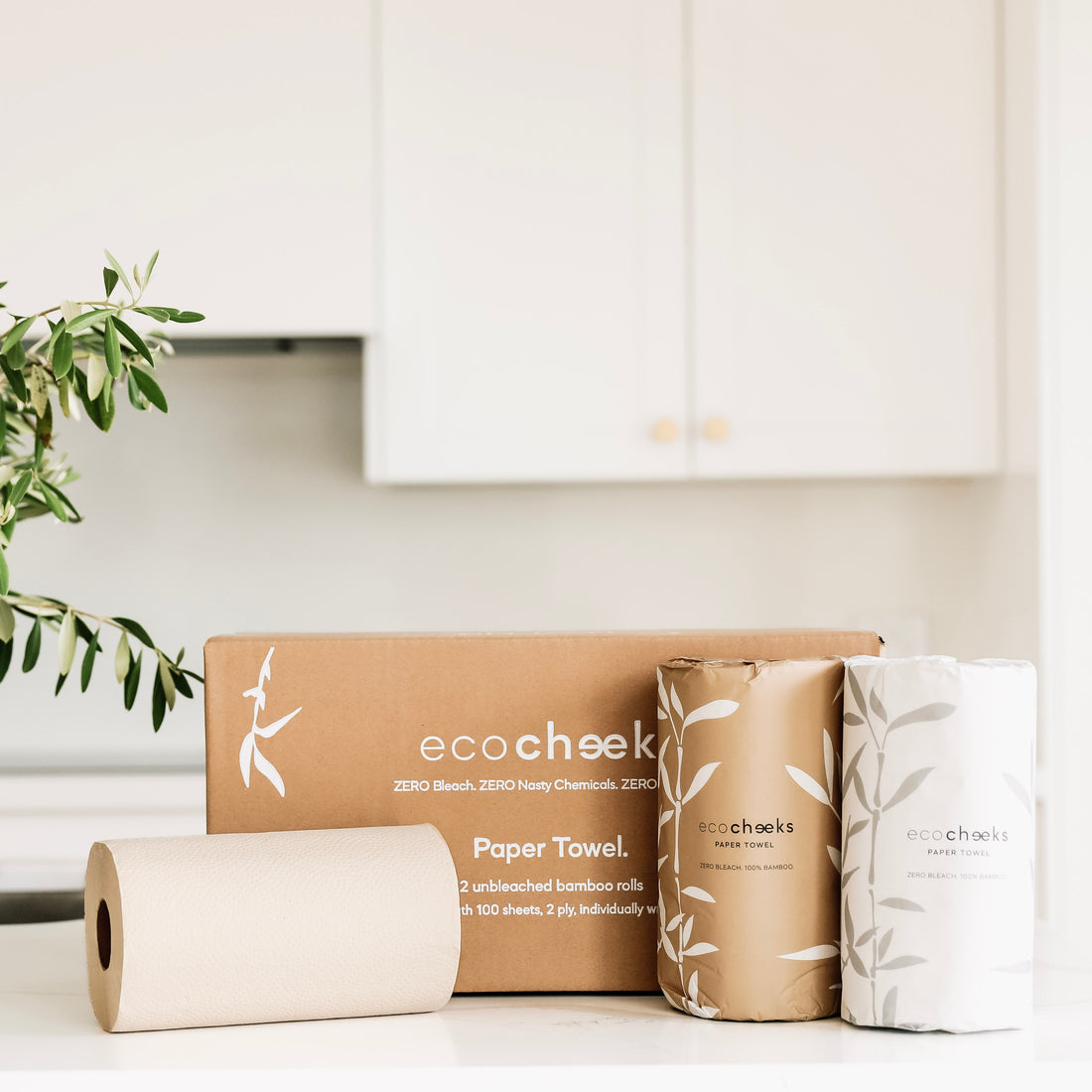
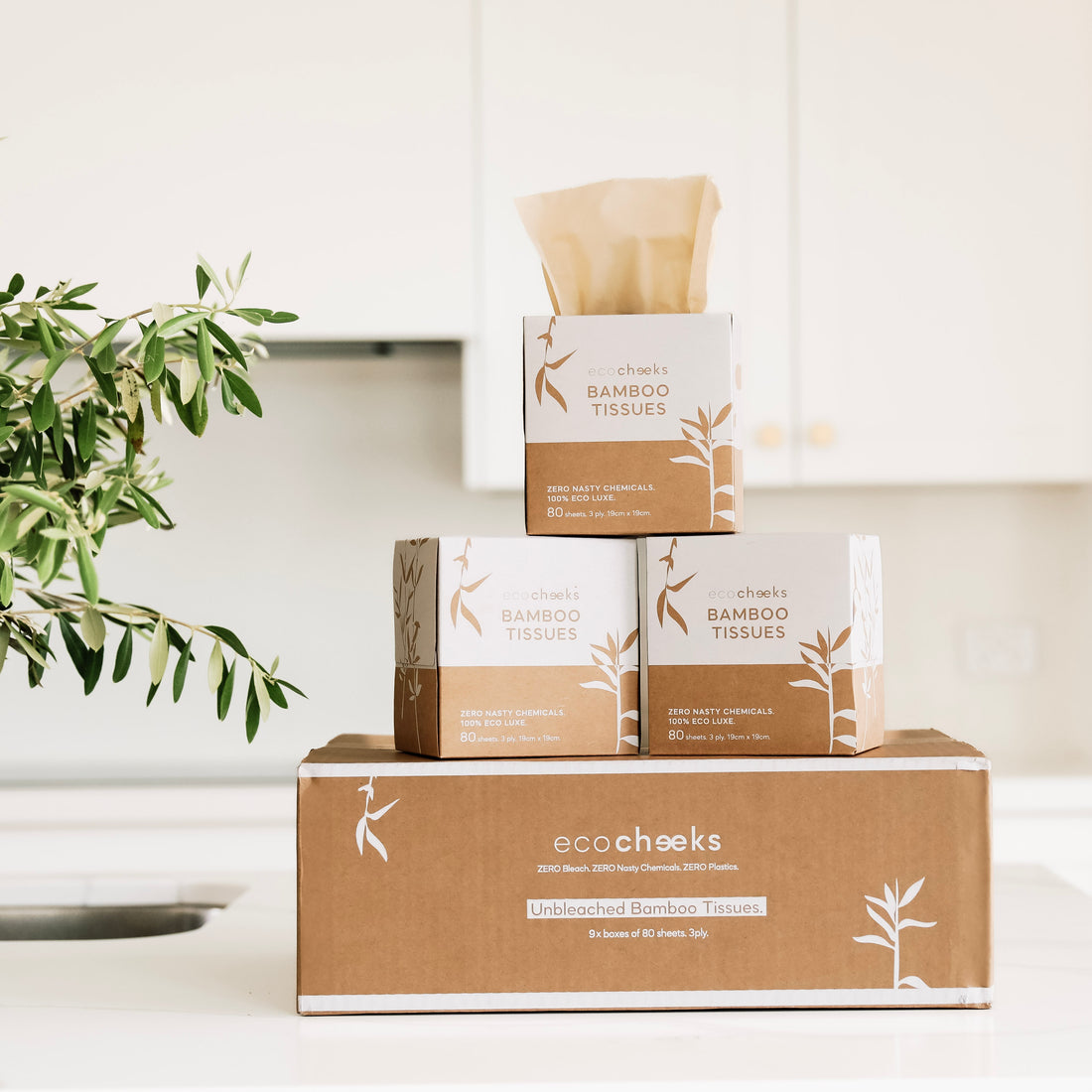
It's the same thinking behind Eco Cheeks. Our bamboo paper towels are unbleached, free from synthetic fragrances and dyes, and come in plastic-free packaging, making them a simple swap for an everyday kitchen essential.
A big thank you to Alexx for sharing her time and expertise with us.
About Alexx Stuart

Alexx Stuart is an Author, Interviewer & Educator and the founder of Low Tox Life, a movement and platform she launched in 2009 to help people make more informed choices for their health and the planet.
For more than 15 years, she's developed courses, books and resources that turn that awareness into practical, everyday change, rooted in scientific evidence. She's also spent a decade hosting the independently published Low Tox Life podcast, interviewing over 500 doctors, scientists and pioneers to bring evidence-based information to anyone who needs it.
By trade, she's a consumer insights and CX Learning & Development specialist and, by nature, a self-described multipassionate in both business and life.
Connect with Alexx:
Low Tox Life website
Instagram: @lowtoxlife