
You're doing the right thing. You're reading labels, choosing the paper bag over the plastic one, picking up the "compostable" coffee cup at the café, and reaching for the cardboard-packaged toilet paper instead of the plastic-wrapped one.
You're making conscious choices, and that matters.
But here's an uncomfortable question worth sitting with: what if some of those choices aren't quite as green as the packaging suggests?
Not because you've done anything wrong. But because the language around sustainability has become so muddied, so heavily marketed, and so cleverly designed to make us feel good at the point of purchase, it's genuinely hard to tell the difference between a product that's better for the planet and one that's just packaged to look that way.
The packaging industry has a talent for reinvention. When plastic became a problem, it became "recyclable plastic." When that lost its shine, everything became compostable. When compostable started raising questions, it became "plant-based." The language changes. The product keeps coming. And the waste keeps accumulating.
Keep Australia Beautiful Week exists because litter and waste are still serious, ongoing problems in this country. And while much of the conversation focuses on the obvious culprits, single-use plastic bags, drink bottles, and takeaway containers, a quieter and arguably more insidious problem has been growing alongside it.
Eco-labelled waste. The kind that ends up in the same place as conventional waste, just with better branding on the way there.
What Is the Difference Between Biodegradable and Sustainable?
Biodegradable describes the end of a product's life. Sustainable describes the entire journey. Those are very different things, and most eco marketing is betting you won't notice.
A product can be biodegradable and still require enormous amounts of energy, water, and resources to manufacture. It can arrive over-packaged in multiple layers of compostable materials. It can travel thousands of kilometres to reach you. And it can quietly encourage you to buy more of it because it feels guilt-free.
Biodegradable is a material property. Sustainable living is a practice. Knowing the difference is one of the most useful things a conscious consumer can do.
Does Biodegradable Mean Eco-Friendly?
Not by itself, no. And this is where a lot of genuinely well-meaning purchasing decisions go a little sideways.
Take compostable packaging. It sounds like a dream. Use it, toss it, done. However, most compostable materials require specific temperatures, moisture levels, and oxygen to break down properly. Conditions you'll find in industrial composting facilities, not your household bin or, worse, landfill. When compostable packaging ends up in general waste, which is where most of it ends up, it can behave almost identically to conventional plastic or cardboard. Sometimes it even releases methane as it slowly breaks down in an oxygen-deprived environment, which is actually worse for the climate than not decomposing at all.
Eco-friendly is a whole-of-life claim. Biodegradable is an end-of-life property. They're not the same. And when it comes to choosing genuinely eco friendly products, that distinction matters more than most labels would have you believe.
Are Eco Disposables Still Wasteful?
Yes. And this is the uncomfortable truth sitting underneath a lot of the eco conversation.
We are living through a golden age of eco-branded disposables. Biodegradable glitter. Compostable zip-lock bags. Three paper straws are doing the job that one plastic straw used to. Recycled cardboard packaging filled with bubble wrap and plastic tape.
The ingenuity that has gone into making throwaway things feel sustainable is genuinely impressive, and genuinely missing the point.
The most sustainable product is usually the one you didn't buy. Or the one you bought once and used for ten years. Or the one that arrived with as little packaging as possible. Most eco marketing lives at the bottom of the sustainability hierarchy and makes it feel like the top.
Is Reusable Better Than Biodegradable?
Almost always, yes, for anything where reuse is genuinely practical. A reusable bag used fifty times beats fifty biodegradable bags on almost every environmental measure. A keep cup beats a compostable cup. A cloth napkin beats a recycled paper one.
The places where disposables genuinely make sense, toilet paper and tissues being the obvious examples, are the places where hygiene and practicality make reuse genuinely impractical. And that's fine.
But outside of those genuinely necessary disposables? Reusable wins. Almost every single time.
Why Is Overconsumption Still a Problem With Eco Products?
Because buying more, even of better things, is still buying more.
Researchers call it the licensing effect. When we do something that feels virtuous, we give ourselves permission to be less careful in other areas.
Bought the eco-branded paper towels? Lovely. Now we're using twice as much of it because it feels fine.
Choose the compostable packaging? Great. Now we're ordering more frequently because the guilt has been outsourced to the label.
The goal of sustainable living isn't to swap every product in your home for a greener version and keep consuming at the same rate. It's worth noting when eco branding is doing more work than the product itself.
The goal of sustainable living is to consume more mindfully overall.
How Can I Reduce Waste at Home?
Start with the products you go through most often and ask whether you're buying them thoughtfully or just automatically.
Buying in bulk where it makes sense means less packaging per unit, fewer deliveries, and less impulse purchasing. Choosing sustainable products with genuinely minimal packaging beats choosing products with impressively designed eco packaging. And when a reusable option exists that you'll actually use, it almost always beats the disposable alternative, even the compostable one.
The swap that tends to stick is the one that requires no ongoing effort once you've made it.
For a practical list of where to start, we put together some Sustainable Swaps for 2026 here.
Is Bamboo Toilet Paper Environmentally Friendly?
Yes, genuinely, and for reasons that go beyond the material itself. Bamboo grows to maturity in a few years with no replanting, minimal water, and no pesticides. It doesn't contribute to the deforestation that virgin wood pulp toilet paper drives. And because bamboo is naturally strong, it doesn't need the heavy bleaching and chemical processing that conventional toilet paper relies on.
Eco Cheeks is one of Australia's most trusted sustainable toilet paper brands precisely because of this. Our eco-friendly toilet paper is unbleached, plastic-free, and free from synthetic fragrances and dyes, everything you want in a genuinely lower-impact bathroom essential, and nothing you don't.
The Bare Bottom Line
This Keep Australia Beautiful Week, the most useful question isn't "Is this product eco-friendly?". It's "Do I actually need this much of it?"
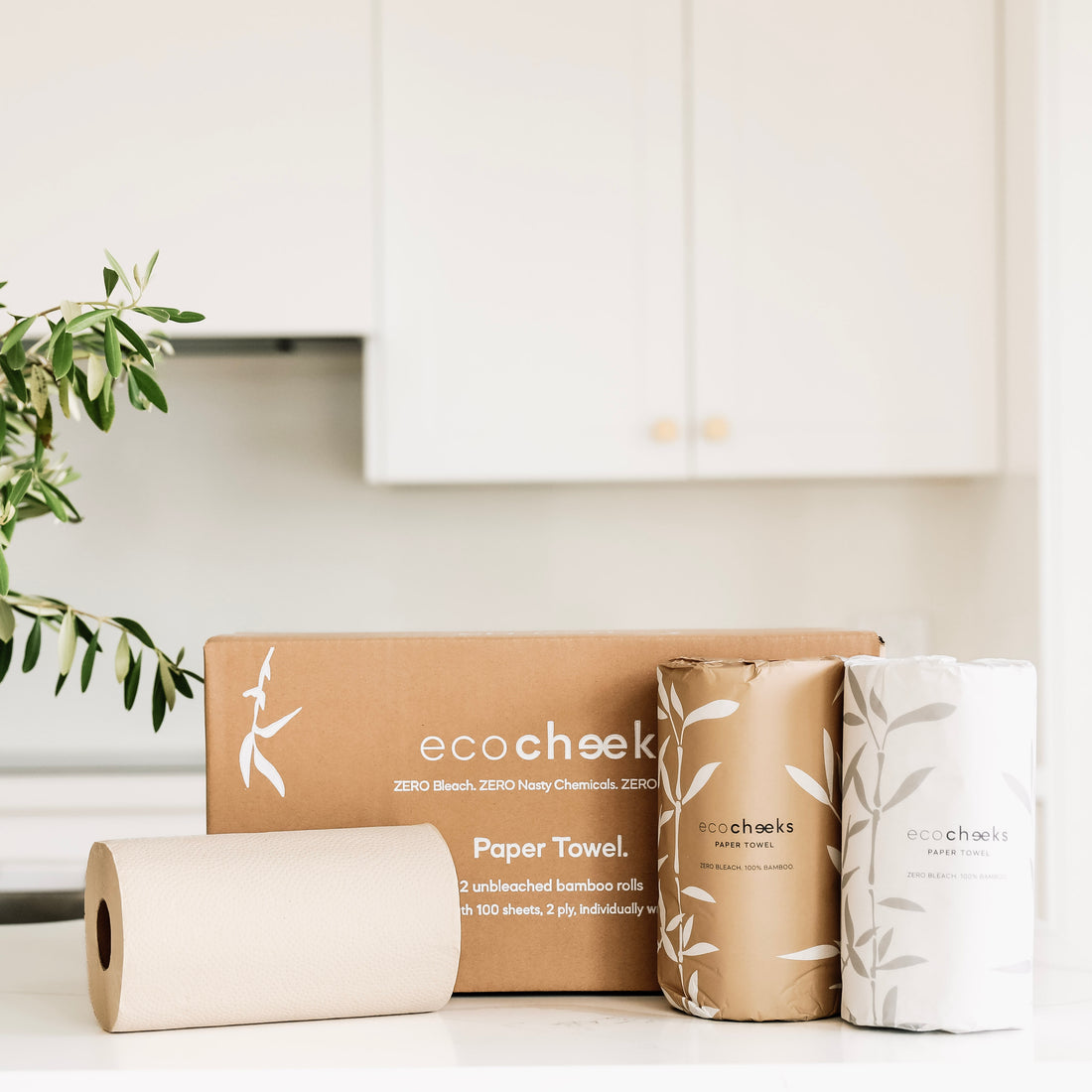
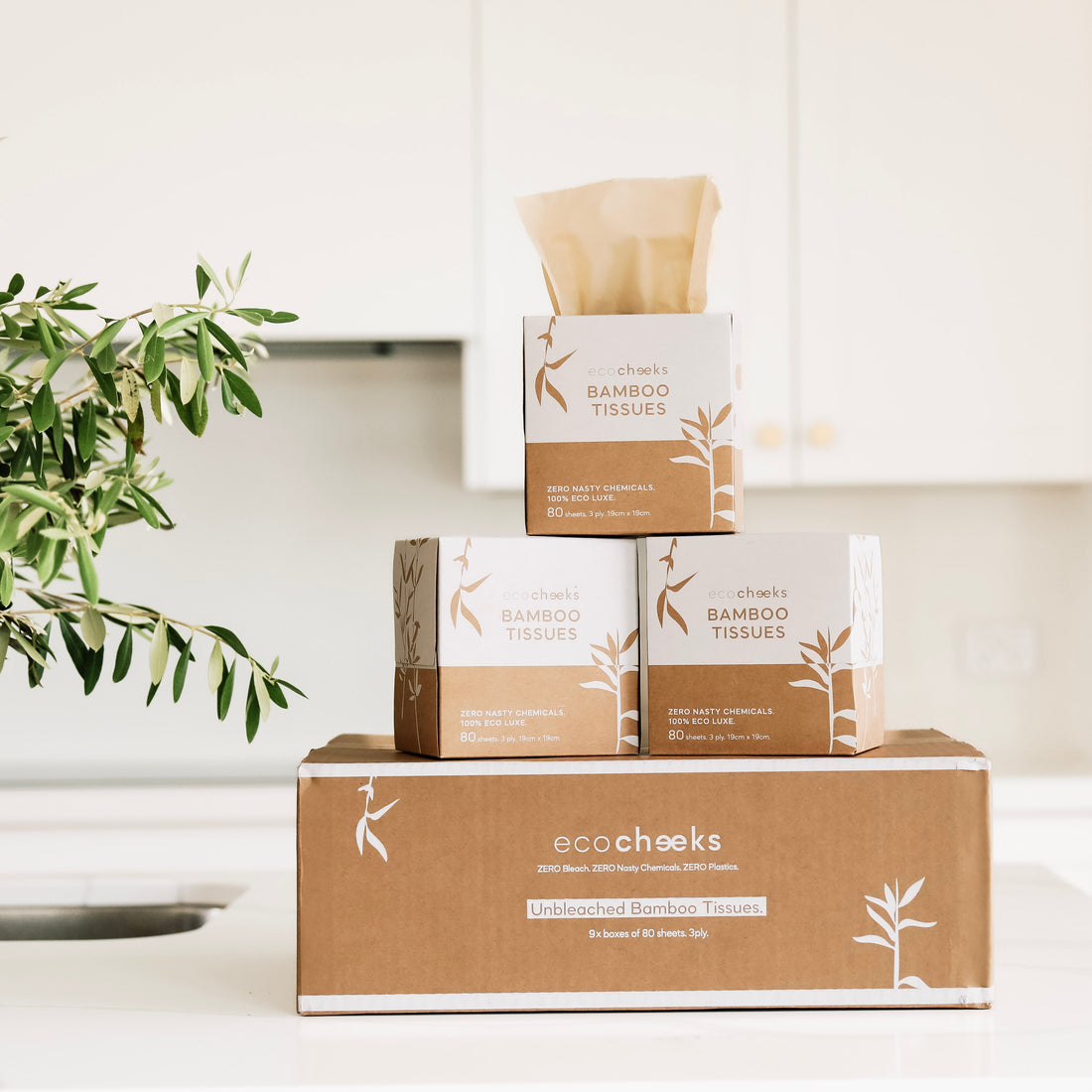
At Eco Cheeks, we're conscious of the bigger picture. Our unbleached bamboo bundles of toilet paper, tissue paper, and paper towels are designed to be bought in bulk, which means less packaging per roll, fewer deliveries, and less of the cycle of constant restocking that leads to grabbing whatever's nearest.
We think good sustainable products should make it easier to consume less, not just feel better about consuming more.
Better materials matter. But they matter most when they're paired with more mindful consumption. Small changes in what you buy, combined with slightly smaller amounts of buying, add up to something real.