
Spoiler: Yes, you should.
We know, we know. Toilet paper is not exactly the kind of thing you lie awake thinking about. You grab a pack off the shelf, it does its job, and life moves on. But here's the thing: toilet paper is one of the most intimate products you use every day, multiple times a day, on some of the most sensitive skin on your body. And most of us have absolutely no idea what's actually in it.
So let's change that. Because once you know, you really will give a crap.
What Even Is "Non-Toxic Toilet Paper"?
Non-toxic toilet paper is exactly what it sounds like. Toilet paper that's made without the unnecessary chemicals, bleaching agents, fragrances, and additives that sneak their way into conventional rolls.
It sounds simple. And it should be. But walk down the toilet paper aisle at your local supermarket, and you'll find products that are chlorine-bleached, artificially fragranced, and wrapped in layers of plastic, all for something that spends approximately three seconds in the spotlight before being flushed away.
Non-toxic alternatives skip the unnecessary processing and focus on what actually matters: something soft, strong, effective, and free from ingredients your body doesn't need.
What's Actually in Conventional Toilet Paper?
This is the part that surprises most people. Conventional toilet paper often contains:
Chlorine bleach. That bright, crisp white colour you associate with "clean"? It comes from chlorine bleaching, a process that can leave behind chemical residues including dioxins and furans, compounds linked to skin irritation and broader environmental concerns. Chlorine bleaching also releases harmful substances into waterways during manufacturing.
Synthetic fragrances. Scented toilet paper might smell like lavender or fresh cotton, but that scent is hiding a cocktail of undisclosed chemicals under the single word "fragrance" on the label. Fragrance compounds have been linked to skin irritation, allergic reactions, and hormonal disruption, particularly concerning given where this product is being used.
Formaldehyde. Some conventional toilet papers use formaldehyde-based resins to improve wet strength. Formaldehyde is a known irritant and has been classified as a human carcinogen by the World Health Organisation.
Bisphenol A (BPA). Recycled toilet paper, despite sounding like the greener option, can sometimes contain BPA from thermal paper like receipts that end up in the recycling stream. BPA is an endocrine disruptor linked to hormonal interference.
Dyes and optical brighteners. Coloured or patterned toilet paper contains artificial dyes that sit directly against sensitive skin. Even "white" toilet paper can contain optical brighteners to make it appear whiter than it is.
Virgin wood pulp. Most conventional toilet paper is made from trees, contributing to deforestation and habitat loss. In Australia, that includes native forests that wildlife like koalas depend on.
PFAS. Also known as "forever chemicals," PFAS have been detected in some conventional toilet paper products. They don't break down in the environment or in the body, and have been linked to hormonal disruption, immune system effects, and long-term health concerns. Not exactly what you want in a product used on your most sensitive skin.
The reality is that conventional toilet paper is one of the most chemically processed products in your bathroom, and one of the least questioned.
Why Does It Matter Where You Use It?
The skin in your intimate area is some of the most permeable and sensitive skin on your body. It absorbs more readily than skin elsewhere, which means anything sitting against it, including chemical residues from bleaching or fragrance compounds, has a more direct pathway into your system.
For people with sensitive skin, eczema, or recurring irritation, conventional toilet paper can be a quiet but consistent trigger. Even for those without obvious sensitivities, cumulative exposure over years of daily use is worth thinking about.
This isn't about fear. It's about making an informed choice with information that should have been obvious all along.
What to Look for in Non-Toxic Toilet Paper
Not all "eco" or "natural" toilet paper is created equal. Here's what actually matters:
✅ Unbleached or oxygen-bleached. The gold standard is unbleached. If bleaching has been used, look for oxygen or hydrogen peroxide-based processes rather than chlorine.
✅ Fragrance-free. No exceptions. Fragrance on a toilet paper label is a red flag, full stop.
✅ Free from dyes and optical brighteners. If it's unnaturally white or has a pattern, ask why.
✅ BPA-free. Particularly relevant if you're considering recycled toilet paper options.
✅ Made from sustainable materials. Bamboo is one of the best alternatives to virgin wood pulp. It grows incredibly fast, regenerates naturally without replanting, requires no heavy pesticide use, and produces naturally long, strong fibres without the need for chemical strengthening agents.
✅ Plastic-free packaging. The product itself isn't the only thing to consider. Conventional toilet paper is almost always wrapped in plastic. Look for paper-wrapped or naked alternatives.
Why Bamboo Is the Non-Toxic Toilet Paper Winner
Bamboo ticks every box. It's naturally hypoallergenic, pest-resistant, and produces strong, soft fibres without requiring the heavy chemical processing that conventional tree-based toilet paper depends on.
Because bamboo fibres are naturally robust, there's no need to add formaldehyde-based resins for wet strength. Because bamboo is naturally light in colour, there's no need for aggressive chlorine bleaching. And because high-quality bamboo toilet paper is already soft, there's no need to add synthetic fragrance to mask a harsh texture or chemical smell.
It's a material that works with nature rather than against it, and that philosophy carries through to the final product on your bathroom shelf.
The Non-Toxic Swap That Costs You Nothing Extra
Here's the best part about switching to non-toxic toilet paper. It doesn't require a lifestyle overhaul. You don't need a new routine, a new bathroom setup, or a new budget. You simply choose a better roll next time you restock.
Same daily habit. Smarter choice. Less chemical exposure for your whole household.
That's worth giving a crap about.
Eco Cheeks: Non-Toxic From Roll to Carton
At Eco Cheeks, non-toxic isn't a marketing term. It's how everything is made.
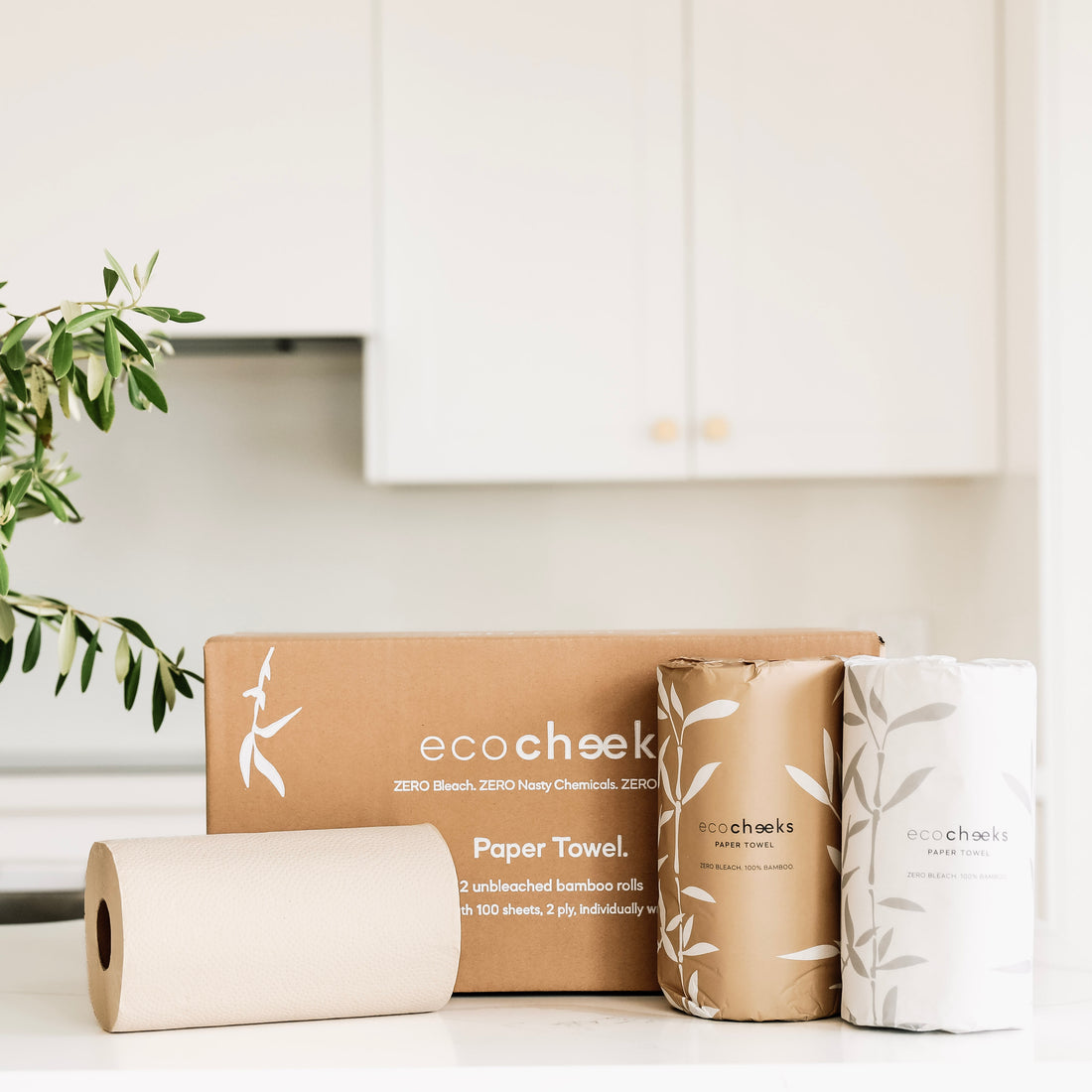
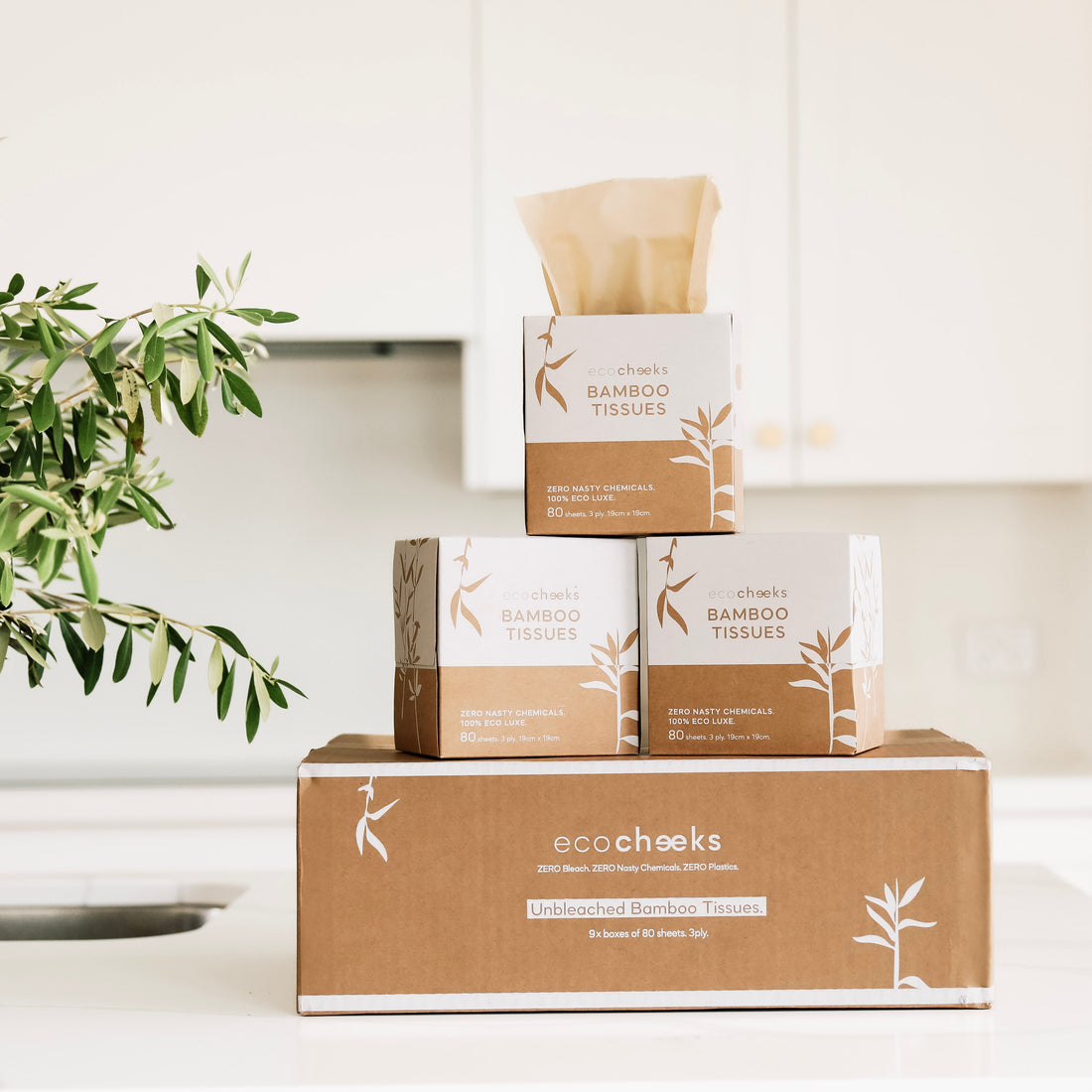
Our 100% bamboo toilet paper is unbleached, fragrance-free, dye-free, and free from chlorine, BPA, and PFAS. No chemical cocktails, no unnecessary additives, and no plastic wrapping. Even our cartons, cores, and thank you cards are completely unbleached, because we think the commitment to toxin-free shouldn't stop at the roll itself.
And because we know life gets busy and running out of toilet paper is nobody's idea of a good time, our bundles make it easy to stock up on everything your household needs in one go.
We go deeper on exactly how we keep everything bleach-free, from the paper to the packaging, in Everything is Bleach-Free: How Eco Cheeks Keeps It Natural.
Ready to Make the Switch?
Eco Cheeks 100% bamboo, unbleached toilet paper and tissue bundles make it easy to stock your home with non-toxic essentials from the bathroom to the kitchen. Bulk-buy your favourites together, save more than just the planet and your cheeks, and subscribe to your order to save even more.