
Cast your mind back to the last time you were in the cleaning aisle at the supermarket. Antibacterial surface spray. Antibacterial hand soap. Antibacterial wipes. Even antibacterial washing-up liquid, just in case the dishes needed an extra layer of protection.
Everything smells clinical, purposeful, and responsible. There's a particular kind of confidence that comes with it. The labels make impressive promises. Kill 99.9% of germs. Protect your family. The implication is clear: the more bacteria you eliminate, the healthier your home.
Somewhere along the way, antibacterial stopped feeling like a product feature and started feeling like a baseline requirement. A box you tick. A standard you hold yourself to.
But here's the question nobody really asks in the cleaning aisle: does antibacterial actually mean healthier?
Are All Bacteria Bad?
Not even close, and this is probably the single biggest misconception sitting underneath the entire antibacterial conversation. The human body hosts trillions of bacteria, collectively known as the microbiome, living on our skin, in our gut, and throughout our respiratory system. Far from being a problem to be eliminated, this bacterial community plays an active role in digestion, immune function, and even mood regulation.
Many of these bacteria are not just harmless. They're essential.
The same is true of the environment around us. Soil bacteria break down organic matter and support plant growth. Even the bacteria living on everyday surfaces in our homes are mostly neutral or beneficial, rather than the aggressive pathogens that antibacterial marketing tends to imply are lurking around every corner.
The handful of genuinely harmful bacteria that cause illness exist alongside an enormous, mostly invisible majority that are either neutral or actively helpful. Antibacterial products don't generally distinguish between the two. They're designed to kill broadly, which means a lot of the bacteria being eliminated were never the problem in the first place.
Why Are Some Bacteria Actually Important for Our Health?
The relationship between humans and bacteria isn't adversarial. It's collaborative, and they are the whole reason we even exist!
Gut bacteria help break down food, produce certain vitamins, and train the immune system to recognise genuine threats. Skin bacteria form a protective layer that can actually help crowd out more harmful microorganisms.
Early exposure to a diverse range of everyday bacteria, particularly in childhood, has been linked to stronger immune development later in life.
This is sometimes referred to as the hygiene hypothesis: The idea that environments that are too sterile may actually contribute to rising rates of allergies and autoimmune conditions, because the immune system doesn't get the everyday exposure it needs to develop properly.
The research in this area is still evolving, but the broader principle is increasingly well accepted. Some level of everyday bacterial exposure isn't just tolerable. It's part of how a healthy immune system is built.
How Has Our Idea of Clean Changed Over Time?
For most of human history, clean meant the visible absence of dirt and the practical avoidance of disease. Handwashing, basic sanitation, and regular cleaning practices reduced disease transmission in ways that genuinely saved lives.
But somewhere along the way, particularly from the mid-to-late 20th century onward, marketing began pushing the definition of clean further and further toward maximum bacterial elimination.
The message shifted from "wash your hands" to "kill 99.9% of germs," implying that anything less than near-total elimination was somehow inadequate.
That shift wasn't necessarily driven by new health research. It was largely driven by the commercial opportunity in convincing people that more antibacterial meant more health. A message that proved very effective and very profitable, regardless of whether the underlying premise held up.
What's the Difference Between Clean and Sterile?
Clean means free from dirt, visible grime, and harmful levels of pathogens. It's a practical, achievable standard for everyday life. Sterile means completely free of all microorganisms, a standard reserved for surgical environments, laboratories, and medical equipment, achieved through intensive, specialised processes that go well beyond a quick wipe down with a spray.
This distinction sits at the heart of the whole conversation, and it's one that's easy to lose sight of when the cleaning aisle is doing its best to blur it.
Most household and personal care situations call for clean, not sterile.
Your kitchen bench doesn't need to be free of every microorganism to be safe for food preparation. It needs to be free of the harmful ones, at levels low enough not to pose a risk.
Antibacterial marketing has a tendency to blur this line, implying that anything less than maximum bacterial elimination is somehow insufficient. It isn't.
Does Antibacterial Really Mean Healthy?
Not automatically, and this is really the crux of it. Antibacterial products are formulated to kill or inhibit bacteria, and in situations where that's genuinely necessary, such as in healthcare settings, food handling after raw meat, or caring for someone who is immunocompromised, they serve an important and legitimate purpose. Nobody is suggesting otherwise.
But for the vast majority of everyday household tasks, regular cleaning is sufficient to maintain a healthy home environment.
Using antibacterial products doesn't automatically translate to a healthier home or a healthier you. In some cases, it may do the opposite, by disrupting the balance of beneficial bacteria that would otherwise help keep harmful microorganisms in check.
A reasonably clean environment, a functioning immune system, and a healthy microbiome tend to do a better job of keeping you well than aggressively sterilising every surface you touch.
Can Antibacterial Products Be Overused?
Yes, and there are a few reasons this matters more than it might seem. Overuse of antibacterial products in the home has been associated with disrupting the natural microbial balance of household surfaces and skin. When the gentler, more benign bacteria are eliminated, it can actually make surfaces more hospitable to the specific strains that do cause problems, simply because the competition has been removed.
Hands are a good example of where this plays out most visibly. Regular soap and water are enough to physically remove the vast majority of dirt, grease, and germs, including the ones that actually make people sick, simply by lifting them off the skin and rinsing them away.
Antibacterial hand soaps and sanitisers go a step further, stripping away much of the resident bacteria that forms a protective layer on the skin's surface. Do that repeatedly, day after day, and skin can end up drier, more irritated, and paradoxically more vulnerable to colonisation by less friendly microbes once the usual competition has been wiped out. For most everyday situations, outside of hospitals, food handling, or caring for someone unwell, plain soap and water does the job just as well, without the trade-off.
There's also a documented concern around antibacterial overuse and antimicrobial resistance. According to Better Health Channel Victoria, overuse of antibacterial cleaning products in the home may be producing strains of bacteria that are resistant to multiple antibiotics. The more frequently bacteria are exposed to antibacterial agents, the more opportunity there is for resistant strains to develop and survive. This is increasingly being studied in relation to everyday household use as well.
And then there's the simpler, more practical issue. Many antibacterial products contain additional chemical ingredients, preservatives, and synthetic fragrances that serve no function beyond the antibacterial claim itself. They add to the chemical load in a home without necessarily adding any genuine health benefit.
What Does a Genuinely Healthy Home Environment Look Like?
A healthy home environment isn't a sterile one. It's a reasonably clean, well-ventilated space where harmful pathogens are kept in check without obliterating the entire microbial ecosystem in the process.
In practice, that looks like regular cleaning with simple, effective products:
-
-
Good ventilation and natural light, both of which naturally support a healthier indoor environment.
-
A general move away from the idea that more chemicals and more aggressive antibacterial claims automatically equal better health outcomes.
-
This is also where the move toward a low tox home fits naturally into the conversation. Choosing products that do their job effectively without unnecessary chemical additions, fragrances, or aggressive antibacterial claims tends to support a healthier home overall, not despite being gentler, but often because of it.
If you're wondering where to start with your own bathroom, we ask the question Should You Give a Crap? and the answer might surprise you.
How Eco Cheeks Keeps it Clean Without the Chemical Overload
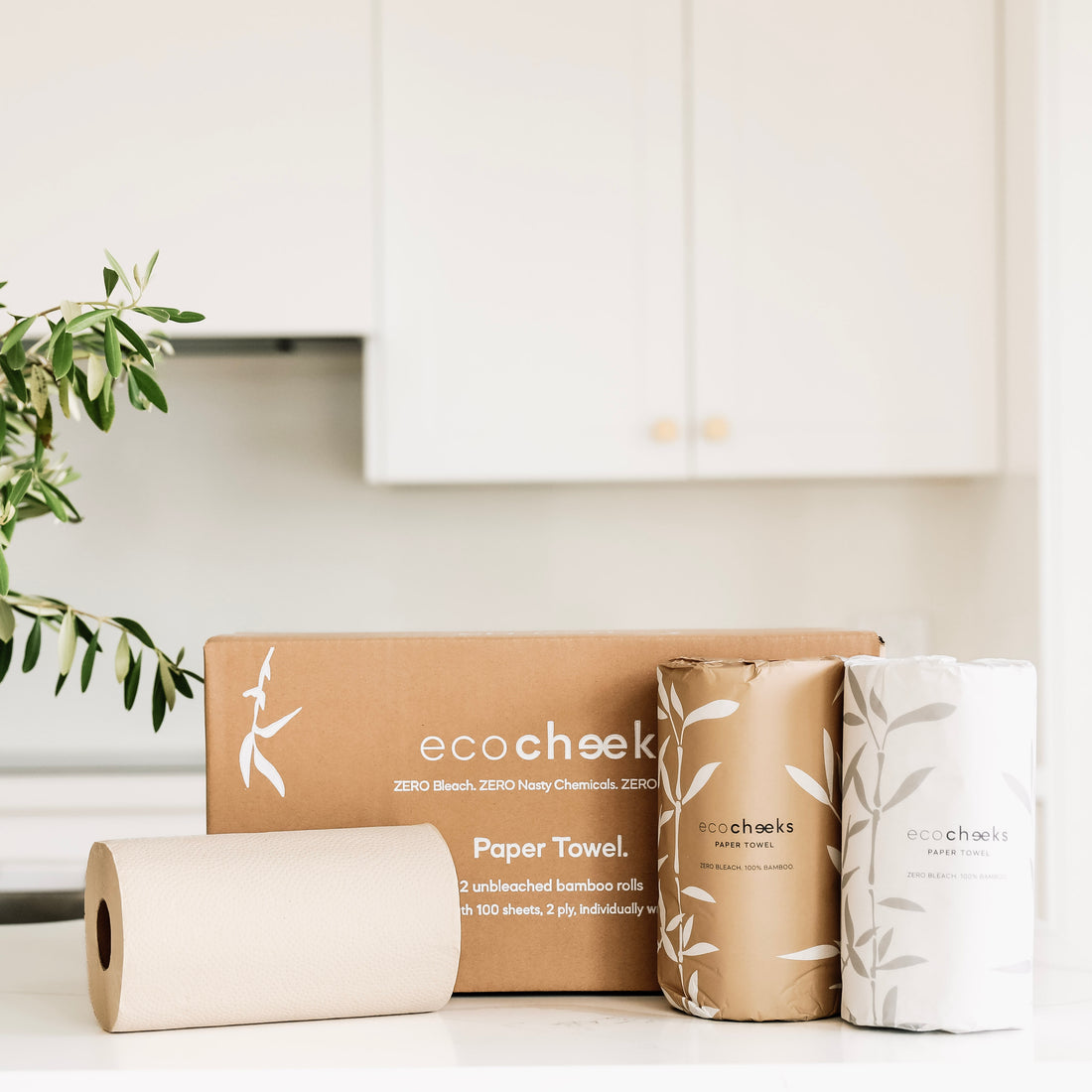
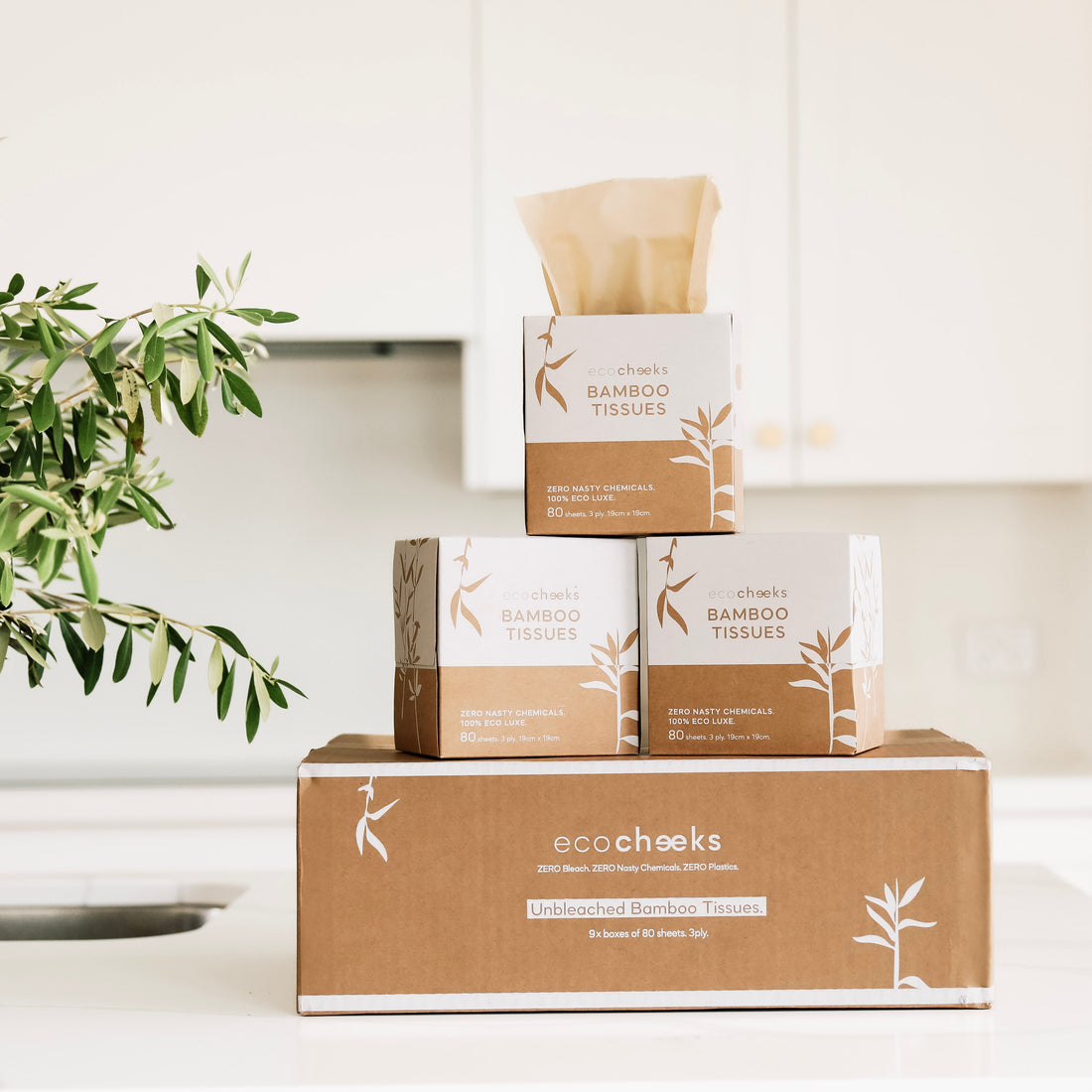
Eco Cheeks bamboo toilet paper, tissues, and paper towels are unbleached, plastic-free, and free from synthetic fragrances, dyes, and unnecessary nasty chemical additives.
We've never made antibacterial claims on our paper products, not because hygiene doesn't matter, but because a genuinely clean, well-made product simply doesn't need one.
It's part of a broader approach to a healthy home environment, one that focuses on what's actually necessary rather than what sounds the most reassuring on a label.
Browse the full Eco Cheeks bundle range here and stock up on the everyday essentials your low tox home needs.