
Walk into almost any bathroom, and you'll find dozens of products you've probably been using for years. Toothpaste. Shampoo. Body wash. Toilet paper. Tissues. Moisturiser. Deodorant.
Most of us choose these products based on how they smell, how they feel, or whether they're on special. But the ingredient list? That's usually the part we skip, and that's understandable.
Many labels are packed with long scientific names that can feel overwhelming, making it difficult to know which ingredients are simply there to do a job and which ones might be worth questioning.
At Eco Cheeks, we believe you shouldn't need a chemistry degree to make informed choices. We also believe that if an ingredient has been linked to potential health or environmental concerns, and it isn't essential for a product to perform well, it's worth asking whether it needs to be there at all.
That's the philosophy behind choosing low tox products. It's not about creating fear or striving for perfection. It's about reducing unnecessary exposure to ingredients that have raised concerns and choosing simpler, more thoughtful alternatives wherever possible.
Which Ingredients Should I Look Out For on Personal Care Labels?
There are thousands of ingredients used in personal care and household products, but only a handful appear again and again in conversations about low tox living.
Many of these ingredients are included to improve fragrance, texture, shelf life, or appearance rather than how well the product actually performs. As research continues to evolve, more people are choosing to reduce their exposure to ingredients that have been linked to potential health, skin, or environmental concerns, especially when effective alternatives already exist.
Here are some of the most common ingredients you'll come across:
| Ingredient | Usually Listed? | What to look for |
| SLS | ✅ | Sodium Lauryl Sulfate |
| SLES | ✅ | Sodium Laureth Sulfate |
| Fragrance | ✅ | Fragrance, Parfum |
| Parabens | ✅ | Methylparaben, Propylparaben, Butylparaben, Ethylparaben |
| Phthalates | ⚠️ Often hidden | Sometimes included within "fragrance" or "parfum" |
| PFAS | ⚠️ Not always obvious | Ingredients containing "fluoro" or "perfluoro" such as PTFE or Perfluorodecalin |
Why Do People Choose Fragrance-Free Products?
One of the biggest surprises for many people is that "fragrance" isn't actually a single ingredient. It's an umbrella term that can represent dozens, sometimes even hundreds, of individual chemicals used to create a product's scent.
Because fragrance formulations are generally protected as commercial recipes, manufacturers aren't usually required to disclose every ingredient that makes up the blend. That means two products labelled simply as fragrance could contain very different chemical combinations.z
Some fragrance blends may also contain phthalates, which have been studied for their potential effects on human health and are commonly used to help scents last longer.
The unknowns around fragrance are reason enough to choose fragrance-free products wherever possible. It's a simple way to reduce unnecessary chemical exposure and may also help minimise irritation for people with sensitive skin, eczema, allergies, or fragrance sensitivities.
Want to dig a little deeper? Read What's Really Hiding in Everyday Products to learn more about fragrance and where it can show up around the home.
What are SLS and SLES?
Sodium Lauryl Sulfate (SLS) and Sodium Laureth Sulfate (SLES) are cleansing agents responsible for the rich lather you see in products like shampoos, body washes, hand soaps, facial cleansers, and even some toothpastes.
They're highly effective at removing dirt and oil, but they can also be quite harsh, particularly with frequent use. For some people, they may strip away the skin's natural protective oils, contributing to dryness, irritation, or a weakened skin barrier.
As awareness around skin health has grown, many brands producing low tox and skin-friendly products have moved towards gentler cleansing ingredients that clean effectively without being as harsh on the skin.
What are Parabens?
Parabens are preservatives used to prevent mould, bacteria, and other microorganisms from growing in cosmetic and personal care products.
While they help extend a product's shelf life, parabens have also been the subject of ongoing scientific research because some have shown the ability to mimic hormones in laboratory studies. Although research is still evolving, many people choose to avoid parabens as part of a precautionary approach to reducing unnecessary chemical exposure.
With many effective preservative alternatives now available, paraben-free products have become increasingly common, making it easier than ever to avoid them.
What are PFAS, and Should I Be Concerned?
PFAS, often referred to as "forever chemicals," are a group of human-made chemicals that resist breaking down in both the environment and the human body.
They're commonly associated with products such as non-stick cookware, waterproof clothing, stain-resistant fabrics, and some cosmetics, but they've also been detected in certain paper products, including some toilet paper.
One of the biggest concerns surrounding PFAS is their persistence. Rather than breaking down naturally, they can remain in the environment for decades and have been linked to a growing body of research investigating their potential impact on both environmental and human health.
Because PFAS are so persistent and have been linked to health and environmental concerns, they're something we believe is worth avoiding wherever possible. Choosing products with fewer unnecessary additives and less chemical processing is one simple way to reduce potential exposure.
What Is Non-Toxic Toilet Paper?
Non-toxic toilet paper generally refers to toilet paper made without unnecessary chemicals, fragrances, dyes, and other additives that don't need to be there in the first place.
For anyone creating a low tox bathroom, that might mean looking for toilet paper that is:
-
-
Unbleached
-
Fragrance-free
-
Dye-free
-
Free from lotions or added perfumes
-
Made from renewable materials such as bamboo
-
Tested for substances of concern, where possible
-
Eco Cheeks bamboo toilet paper keeps things simple. It's naturally beige because it isn't chemically bleached, contains no added fragrance or dyes, and is made from 100% bamboo. We also independently test our toilet paper for PFAS, with the PFAS compounds included in the testing not detected.
Sometimes, less really is more.
How Can I Check If a Product Is Low-Tox?
The good news is you don't need a science degree to start reading labels more critically. A few simple habits make a real difference.
Reading ingredient labels gets much easier once you know what you're looking for. You don't need to scrutinise every product you own; just build a few simple habits that make shopping a little easier over time.
✅ Search ingredients you don't recognise. If an ingredient sounds unfamiliar, a quick search usually tells you what it is and whether it's flagged for any concerns.
✅ Read the ingredient list, not just the front of the pack. Marketing claims like "natural," "gentle," or "dermatologist tested" aren't regulated terms in Australia and can appear on any product regardless of what's actually inside. The ingredient list on the back is where the real information lives.
✅ Look for short, recognisable ingredient lists. The fewer the ingredients, and the more recognisable they are, the less likely you are to encounter the additives worth avoiding. This isn't a hard rule, but it's a useful starting point.
✅ Trust gradual progress over perfection. You don't need to audit your entire bathroom in one sitting. As products run out, replace them with better options. Over time, small intentional swaps add up to a meaningfully different bathroom cabinet.
What Apps Can Quickly Scan Product Ingredients?
If you're standing in the supermarket wondering whether a product is worth buying, these apps can be a handy shortcut.
You also don't need to become a cosmetic chemist to make better choices in the bathroom. And if reading labels manually feels like too much effort in the moment, there are a couple of apps that make ingredient checking surprisingly accessible. These two apps do the heavy lifting for you.
-
Yuka App - It’s a popular ingredient scanning app that rates food and personal care products based on their ingredients. It's free, easy to use, and gives each product a simple score with a breakdown of why. Yuka has a growing database of Australian products and is a good everyday tool for quickly checking what's in the products you're considering.
-
EWG Healthy Living App - The Environmental Working Group is a US-based non-profit research organisation that rates personal care and household products based on their ingredient safety data. Their Healthy Living app lets you scan a product barcode and instantly receive a rating, flagging any ingredients that have raised concerns in scientific literature. It's worth noting that the EWG database skews heavily toward US products, so some Australian products may not be listed. Still a solid starting point.
Of course, the bathroom is only one part of the picture. Once you start paying more attention to ingredients, you might be surprised where else they show up around the home. If you're curious, have a read of 7 Most Toxic Everyday Items Hiding in Your Home. It explores a few other everyday products that often fly under the radar, from cookware and cleaning products to plastics and synthetic fragrances.
Building a Healthier Bathroom, One Swap at a Time
Creating a healthier bathroom doesn't require a dramatic overhaul. In fact, the most sustainable approach is usually the most gradual one. As products run out, replace them with better options. Start with the products you use most frequently, and that come into closest contact with your skin. Your body wash, your shampoo, and yes, your toilet paper, are good places to begin.
Reading labels becomes easier with practice, and apps like EWG and Yuka take most of the effort out of it. The goal isn't perfection. It's just awareness, followed by intentional choices made over time.
A healthier bathroom is built one product at a time, and every swap counts.
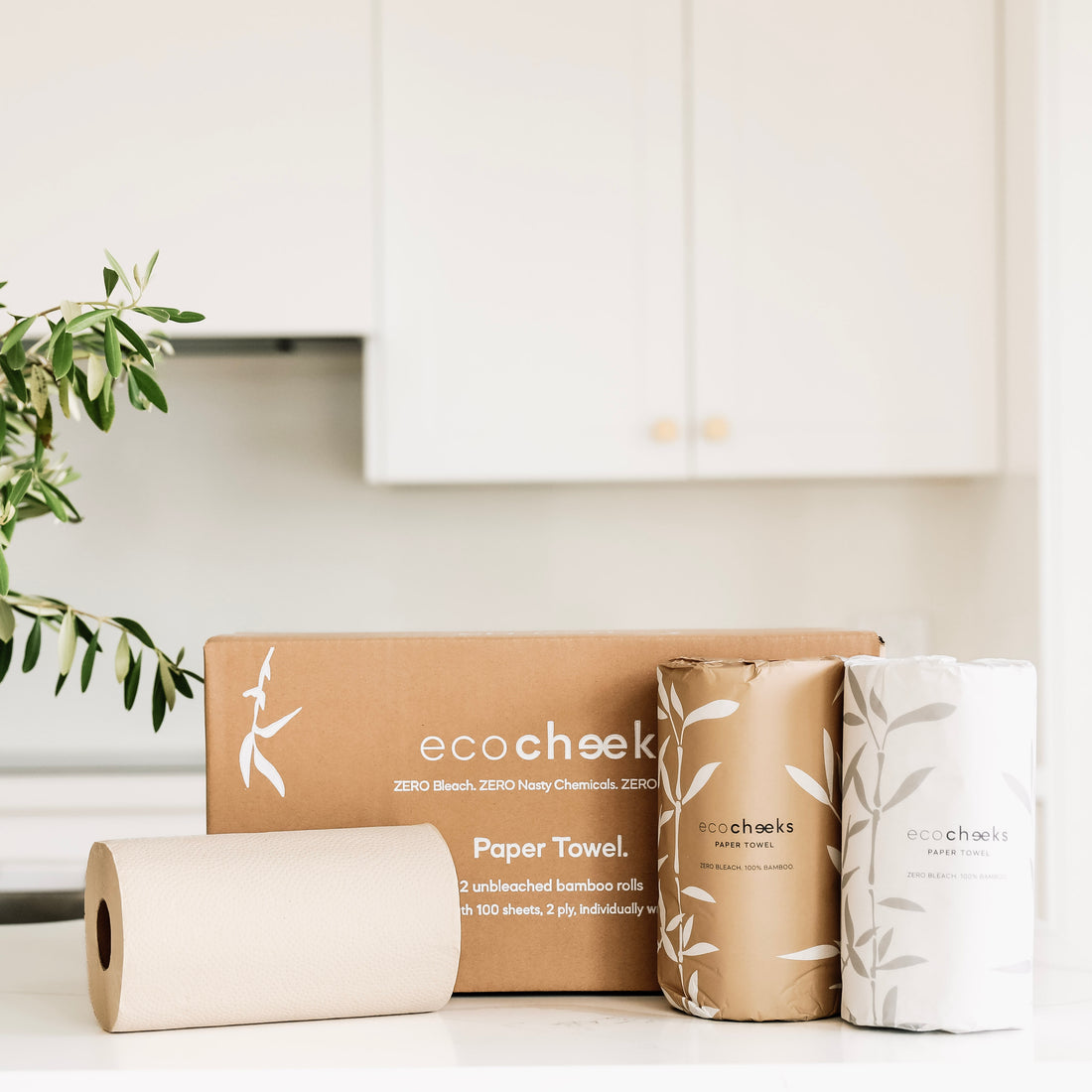
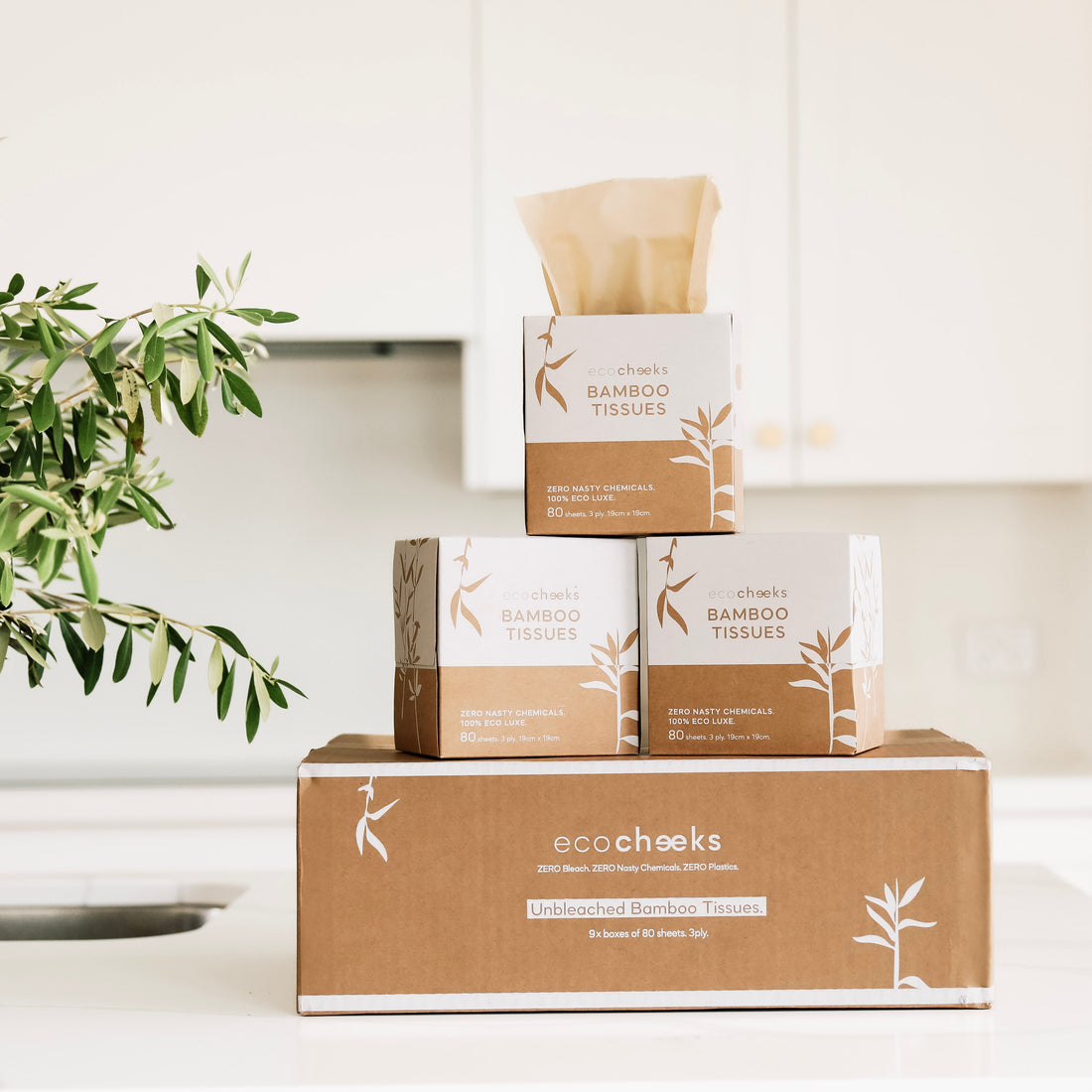
That's exactly why Eco Cheeks keeps things simple. Our 100% bamboo toilet paper, tissues, and paper towels are unbleached, fragrance-free, dye-free, and made without unnecessary extras. No harsh bleaching, no added perfumes, and no plastic wrapping- just thoughtfully made everyday essentials that are kinder to your skin and the planet.
If you're building a low tox bathroom, your toilet paper is one of the easiest places to start. Browse the full Eco Cheeks bundle range here. Or if you'd like to try before committing to a bundle, grab a Roll Me 6 sample pack here.