
Most of us do not spend a lot of time thinking about the chemicals hiding in everyday household products. If something is sitting on a supermarket shelf, we tend to assume it has been thoroughly vetted and is completely harmless.
But in recent years, one group of nasty chemicals has started getting a lot more attention from scientists, health researchers, and environmental agencies around the world: PFAS.
These chemicals have been found in everything from waterproof clothing and non-stick cookware to food packaging, cosmetics, drinking water, and yes, even some toilet paper.
Now, to be clear, not every chemical is automatically dangerous. Water is a chemical. Salt is a chemical. The issue with PFAS is not simply that they exist, but that many of them do not break down naturally and can accumulate in the environment and the human body over time. That is what has researchers concerned.
And when products like toilet paper come into contact with some of the most sensitive and absorbent skin on your body every single day, people are understandably starting to ask more questions about what is actually in them.
At Eco Cheeks, we ask those questions too. A lot. From the materials we source to the way our products are processed, we are incredibly conscious about keeping unnecessary nasties out of the toilet paper you bring into your home.
So let's break it all down properly.
What are PFAS, and why are people concerned about them?
PFAS stands for per- and polyfluoroalkyl substances, a large group of human-made chemicals known for being incredibly resistant to heat, oil, grease, and water. That resistance made them extremely popular in manufacturing for decades.
The problem is that PFAS do not break down easily. They persist in the environment for an incredibly long time, which is why they are often referred to as "forever chemicals".
Over time, PFAS can accumulate in soil, waterways, wildlife, and the human body. And that is where concerns start to grow.
PFAS have been used in products like:
-
-
Non-stick cookware
-
Waterproof jackets
-
Stain-resistant carpets
-
Food packaging
-
Firefighting foams
-
Cosmetics
-
Some paper and hygiene products
-
How does PFAS affect your health?
Research into PFAS is still ongoing, but long-term exposure has been linked to a growing number of potential health concerns. Some studies have associated PFAS exposure with:
-
-
Certain cancers, including kidney and testicular cancer
-
Hormonal and thyroid disruption
-
Liver damage
-
Reduced fertility
-
Developmental issues in children
-
Changes to immune system function
-
One of the challenges with PFAS is that exposure is rarely coming from a single source. It is the cumulative effect of repeated exposure across lots of everyday products over time that concerns researchers most.
That is why awareness matters. And honestly, it is also why more people are starting to think more carefully about the products they use every single day, especially products that repeatedly touch sensitive skin.
Explore more about The Hidden Impact of Harsh Chemicals on Your Skin, including why everyday essentials like tissues, wipes, and toilet paper can matter far more than most people realise when it comes to skin sensitivity, irritation, and long-term chemical exposure.
Where do PFAS come from?
PFAS contamination comes from a surprisingly wide range of sources because these chemicals have been used so extensively across global manufacturing.
Some of the most common sources include:
1. Industrial manufacturing
Historically, PFAS were widely used in factories producing consumer goods and industrial materials. Even though some of the more harmful PFAS compounds are now restricted or phased out in parts of the world, many still remain in circulation and continue to persist in the environment.
2. Firefighting foams
Certain firefighting foams used for fuel fires contain PFAS, particularly around airports, military bases, and fire training sites. These have become major contamination hotspots globally.
3. Food packaging and household products
Grease-resistant fast food wrappers, microwave popcorn bags, cosmetics, waterproof materials, and some processed paper products may all contain PFAS or come into contact with them during manufacturing.
4. Contaminated water
PFAS can enter waterways through industrial waste and contamination, meaning water used during manufacturing processes can also become part of the problem.
Why have PFAS been found in toilet paper?
This is usually the point where people pause mid-read and go, "...wait, what?"
But yes, researchers have identified PFAS in some toilet paper and paper-based products in recent years. There are several possible reasons for this.
1. Recycled paper contamination
PFAS can enter recycled paper streams through contaminated post-consumer materials, meaning they may unintentionally end up in new paper products.
2. Manufacturing processes
If the water or machinery used during paper manufacturing has been exposed to PFAS, traces can potentially transfer into the final product.
3. Chemical additives
Some paper products may use additives, coatings, or processing aids that contain PFAS compounds.
When you think about how often toilet paper comes into contact with sensitive skin, particularly intimate skin, it starts to make sense why more people are paying attention to what is actually in these everyday products.
HOW TO REDUCE PFAS EXPOSURE AT HOME
You can never completely avoid PFAS in modern life, but there are absolutely ways to reduce your exposure.
Some simple swaps include:
-
-
Choosing low-tox or PFAS-free products where possible
-
Choosing unbleached paper products
-
Avoiding heavily fragranced household products
-
Reducing the use of non-stick cookware once damaged
-
Avoiding unnecessary chemical coatings and treatments
-
Being more mindful of heavily processed disposable products
-
Small changes really do add up over time.
Eco Cheeks’ Independent Testing and Accountability
At Eco Cheeks, we take product safety seriously, which is why we arranged independent testing through the Australian Government Department of Industry, Science, and Resources.
Through that testing process, no detectable traces of PFAS were identified in Eco Cheeks’ toilet paper products tested.
It is important to note that there are thousands of PFAS compounds in existence, and testing generally focuses on the major known PFAS substances currently monitored and regulated.
But for us, this is about more than a single test result. It is about being intentional with every stage of the product itself, from choosing bamboo instead of virgin tree pulp to avoiding unnecessary bleaching chemicals, added fragrances, dyes, and other harsh processing agents wherever possible.
Because if something is going to touch your skin every single day, we think it should be as clean, gentle, and low-tox as realistically possible.
Still, transparency matters to us. A lot.
If you would like more information about the independent testing results, you are always welcome to contact us directly at hello@ecocheeks.com.au.
Small Bathroom Choices Matter More Than You Think
Toilet paper might seem like a tiny part of the bigger picture, but the reality is we use it every single day, multiple times a day, for our entire lives. That makes it one of the easiest places to make a lower-tox swap without changing your routine at all.
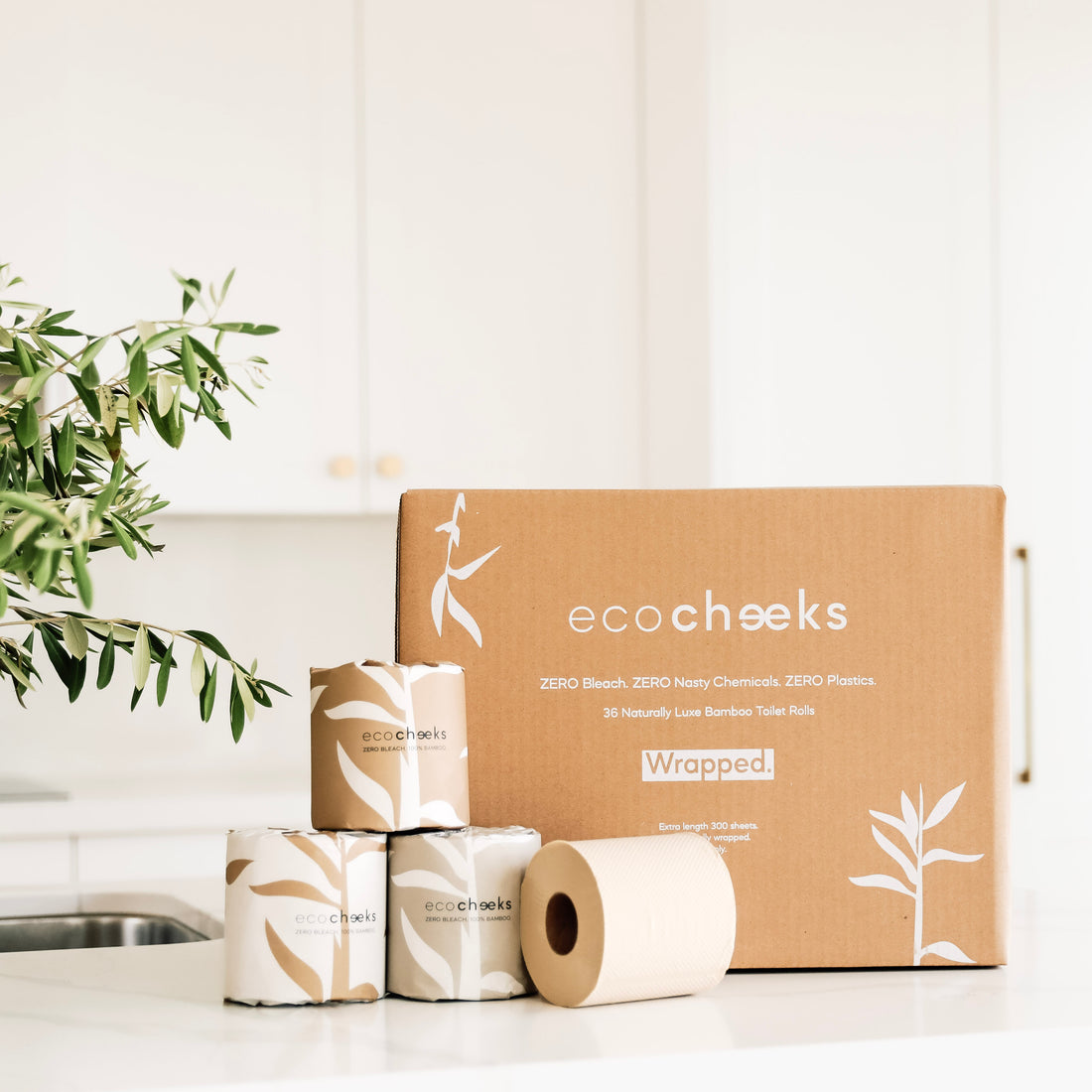
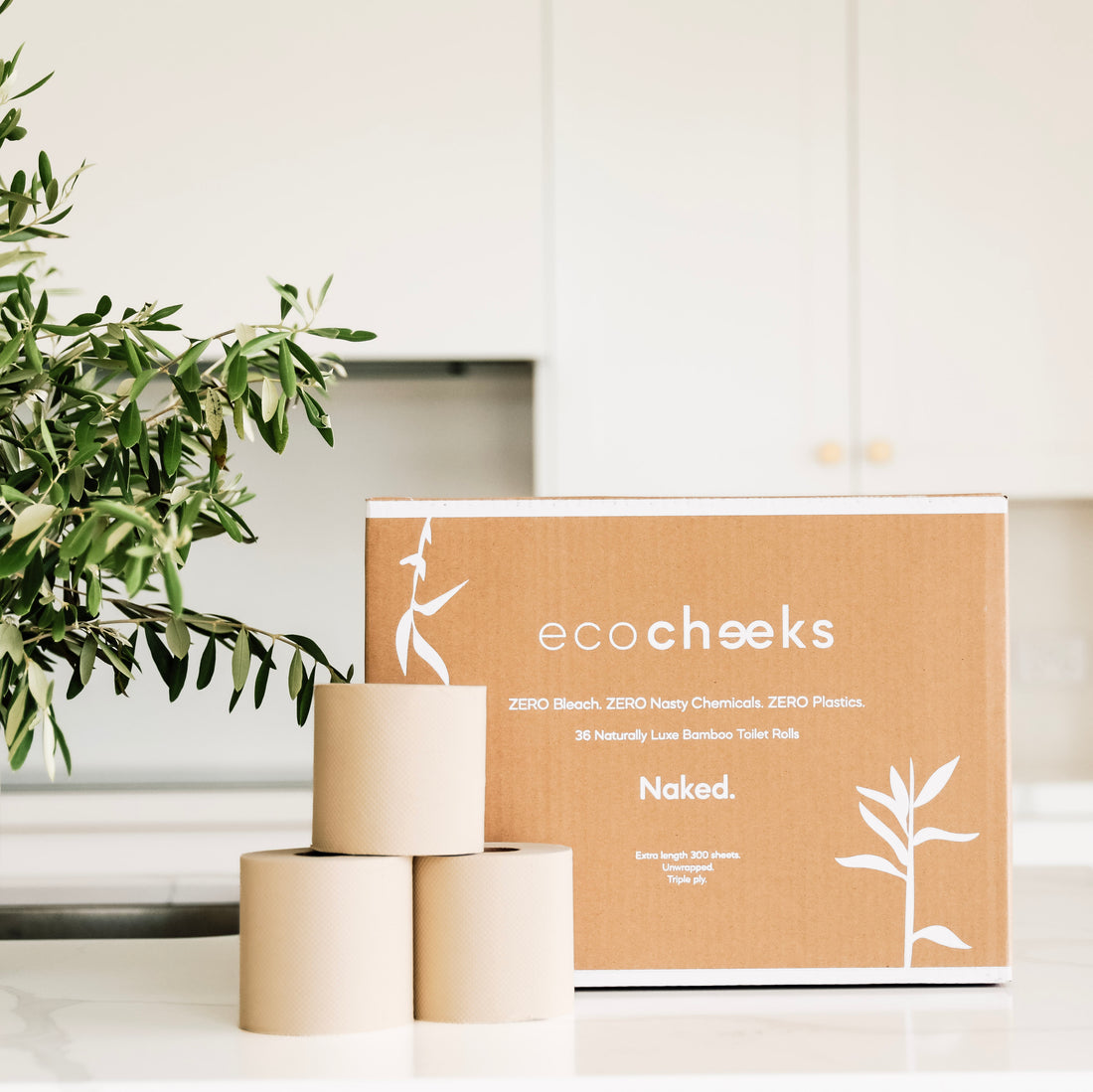
Eco Cheeks 100% bamboo toilet paper bundles are unbleached, free from added fragrances, plastic-free, and designed to be gentler on both your body and the environment.
No dramatic lifestyle overhaul required. Just a slightly better everyday choice.
And honestly, those are usually the swaps that stick. 🌿