
Your kitchen is probably one of the hardest-working rooms in your home.
It's where you make your morning coffee, pack lunches, reheat leftovers, cook dinner and clean everything up ready to do it all again tomorrow. And most of the products helping you do those things are so familiar, you barely notice them anymore.
Until something makes you look twice.
Maybe you hear something about the coating on non-stick pans. Or microplastics from cutting boards. Maybe you turn over a cleaning product and actually read the ingredient list for the first time. Maybe you're staring at a string of words ending in -ide and -xin that you don't recognise. What even are these? And why are they in something you're using all over your kitchen?
And suddenly, you're looking around your kitchen a little differently.
The plastic spatula sitting in the frying pan. The container you reheat leftovers in. The chopping board you've used every night for years. The cling wrap touching tomorrow's lunch.
The kitchen is a natural place to focus when you're trying to reduce toxins at home because so many everyday products come into direct contact with the food and drinks you consume, often while they're hot.
But before you start emptying cupboards into the bin, creating a low tox kitchen doesn't mean replacing everything you own.
In fact, throwing out a kitchen full of perfectly usable products just to replace them with shiny new "non-toxic" alternatives creates an entirely different problem.
A more practical approach is to understand what matters most, prioritise the products with the highest food and heat contact, and make better choices when something genuinely needs replacing.
What Should You Replace First in a Low Tox Kitchen?
If you're now mentally inventorying every plastic item you own, don't.
A useful place to start is with two things: food contact and heat.
Products that regularly touch your food deserve a little more attention, particularly when heat is involved. Think frying pans, cooking utensils, food containers and anything you're pouring boiling water through.
From there, you can work your way through the easier everyday swaps as things run out or need replacing.
So rather than a kitchen clean-out, think of this as your what-to-swap-next list.
1. Non-Stick Cookware → Stainless Steel or Cast Iron
That non-stick pan makes scrambled eggs wonderfully easy. But the coating that stops your breakfast sticking is also one of the first things worth understanding in a low tox kitchen.
Many traditional non-stick coatings have historically been made using PFAS, a large group of synthetic chemicals often called "forever chemicals" because of how persistent they are in the environment.
If your non-stick pans are scratched, chipped or the coating is starting to deteriorate, it might be time to move them higher up your replacement list.
Stainless steel, ceramic and cast iron are two popular alternatives. Neither relies on a synthetic non-stick coating, and a good-quality pan that's properly looked after can stay in your kitchen for years.
No matching cookware overhaul required. Start with the pan you use most.
2. Plastic cooking utensils → Wood or stainless steel
Now look at what's actually touching that hot pan. Plastic spatulas, spoons and turners spend plenty of time stirring, scraping and flipping food at high temperatures. Over time, they can become scratched, warped or visibly melted around the edges.
If your utensil drawer contains a few casualties, wood and stainless steel are simple alternatives to consider as you replace them. They're durable, practical and don't need to be complicated.
3. Plastic food containers → Glass or stainless steel
Most kitchens have that cupboard. You open the door, twelve different containers fall out, and yet somehow none of the lids fit.
There's no need to throw them all away in the name of creating a low tox kitchen. Instead, pay attention to what you're putting in them and how you're using them.
Heat is particularly worth considering. If you're storing steaming leftovers or regularly reheating food, glass can be a useful alternative because it avoids putting hot food directly against plastic.
As old containers become cracked, heavily scratched, stained or mysteriously lidless, gradually replace them with glass or stainless steel.
4. Plastic wrap → Reusable covers and containers
Cling wrap is another kitchen product that's easy to use without really thinking about it. Wrap the sandwich. Cover the leftovers. Seal half an avocado. Throw it away.
Reusable silicone covers, beeswax wraps, reusable food bags and containers with lids can all reduce how often you reach for plastic wrap.
If you're ready to use less cling wrap, we've rounded up 6 Simple Plastic Cling Wrap Alternatives for a Low-Waste Kitchen, including a few options you may already have at home.
5. Plastic colanders → Stainless steel
Your colander might have escaped scrutiny until now. If you're tipping boiling pasta water, freshly cooked vegetables, or hot potatoes through plastic several times a week, it's another high-heat contact point worth putting on your radar.
A stainless steel colander is a simple replacement when your current one eventually needs retiring. It's sturdy, easy to clean, and could potentially be the last colander you need to buy for a very long time.
6. Plastic cutting boards → Wood
Cutting boards have one of the toughest jobs in the kitchen. They're sliced, chopped, and scraped against constantly, and plastic boards can develop plenty of grooves and scratches over time.
If your current board looks like it's survived several decades of Sunday roasts, wood is worth considering for its replacement. A good wooden chopping board can last for years when it's cleaned, dried and cared for properly.
And whatever material you're using, a board that's deeply damaged and difficult to clean deserves retirement eventually.
7. Plastic drinkware → Glass or stainless steel
If your water bottle goes everywhere with you, that's a lot of daily contact with one product.
Again, this isn't an invitation to throw away a perfectly functional reusable bottle because you've discovered a prettier stainless steel one. Keep using what you have.
When plastic bottles and cups eventually become scratched, cracked, cloudy, or simply reach the end of their useful life, glass and stainless steel are alternatives worth considering.
Choose something durable that you'll actually keep using rather than whatever reusable bottle happens to be trending this month.
8. Unfiltered water → A filter that suits your home
If you're thinking more carefully about what goes into your food and drinks, you may also start wondering what's in the water you're using to make them.
A water filter can be worth exploring depending on your local water supply and what you're specifically looking to reduce.
Different filters are designed to reduce different substances, so look for what a particular filter has actually been independently tested or certified to remove rather than assuming every filter does the same thing.
"Filtered" doesn't tell you much unless you know what's being filtered.
9. Cleaning products and dish soap → Simpler options
Remember that ingredient label that started this whole kitchen investigation? It's worth coming back to.
Cleaning sprays and dishwashing liquids are used constantly around food preparation surfaces, cookware, plates, glasses and cutlery. If you're trying to reduce unnecessary chemicals around the kitchen, they're relatively easy products to reconsider when your current bottles run out.
Look for simpler formulations and consider fragrance-free or lower-tox alternatives where practical.
And don't assume you need a different bottle for every possible cleaning job either.
One for the bench. One for the sink. One for stainless steel. One for the stovetop. One that apparently only cleans things on Tuesdays.
Sometimes reducing what's in your cleaning cupboard is just as useful as replacing what's in it.
10. Everyday cleaning essentials → Unbleached and reusable alternatives
Then there are all the little things you reach for during the clean-up. Paper towels. Cleaning cloths. Dish brushes. Sponges.
They might not feel as significant as cookware or food storage, but they're some of the most frequently used products in the home. That makes them an easy place to be a little more thoughtful about materials, processing and unnecessary extras.
For cleaning jobs where something reusable makes sense, cellulose cloths can replace many disposable wipes, while wooden or biodegradable dish brushes are worth considering when your current plastic ones reach the end of their life.
For the paper products you do use, look beyond how soft, white or pretty they are. Choosing unbleached products without unnecessary fragrances, dyes or harsh bleaching is another simple way to reduce the extras coming into your home.
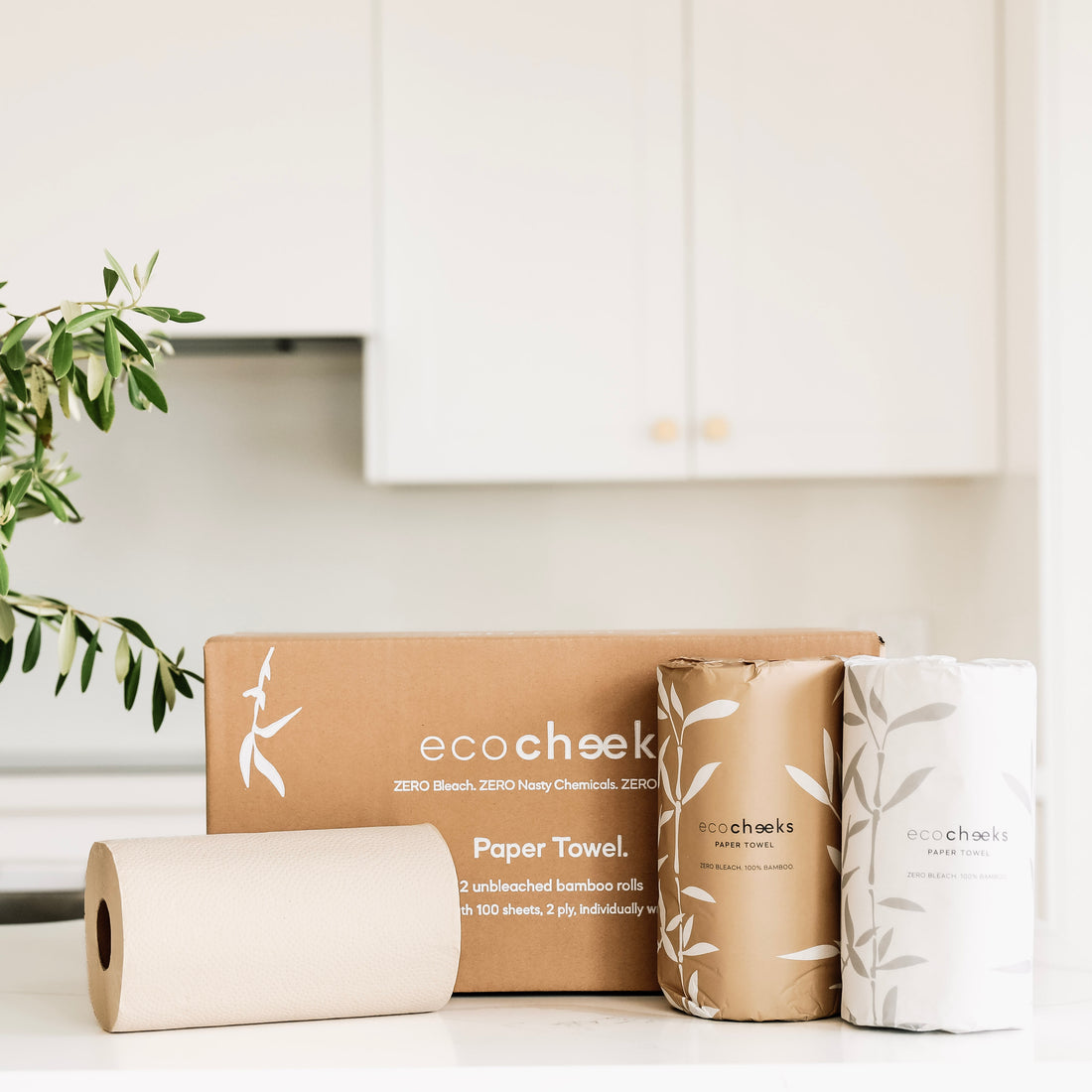
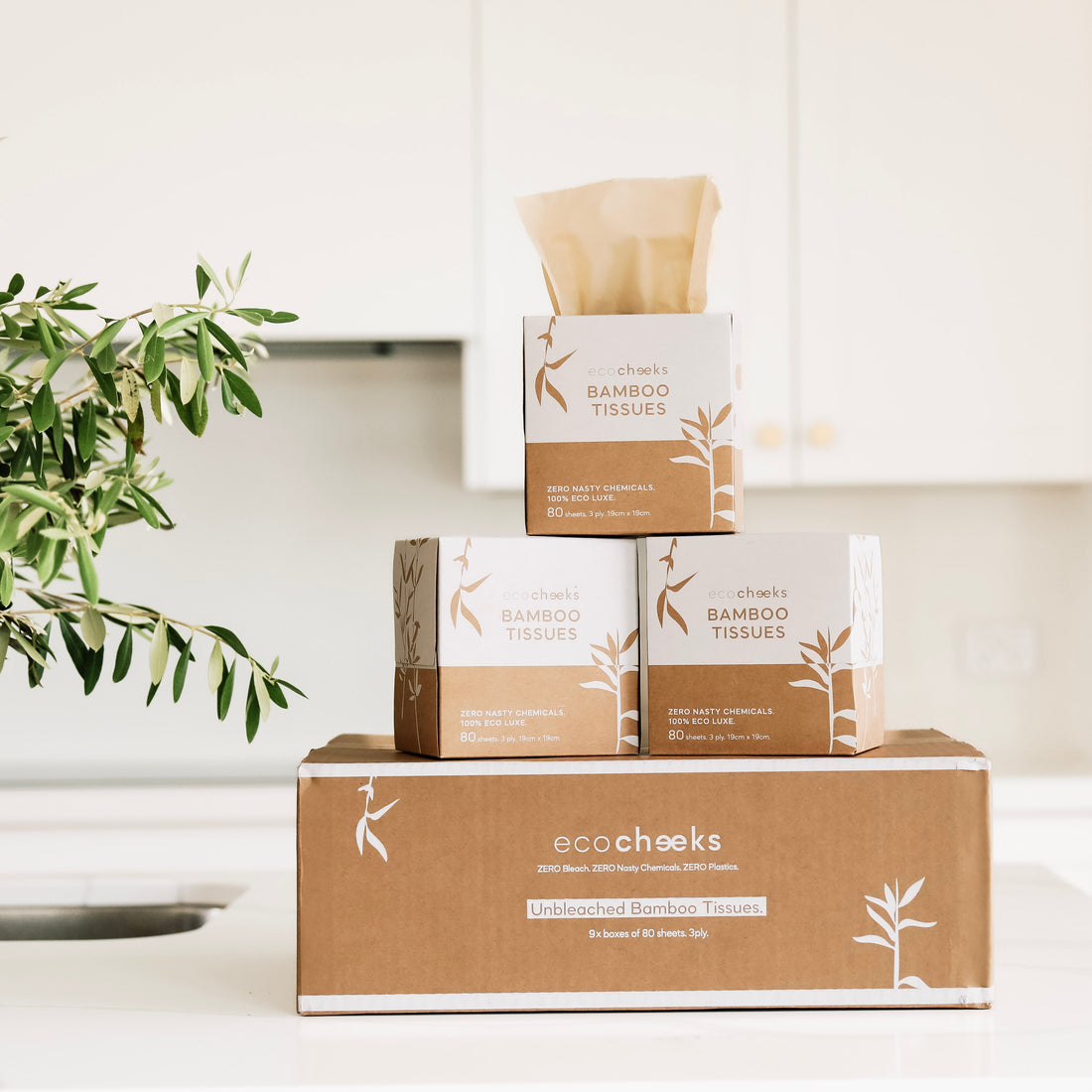
That's the thinking behind Eco Cheeks. Our 100% bamboo toilet paper, facial tissues and paper towels are all unbleached and made without unnecessary fragrances and dyes, keeping everyday essentials refreshingly simple.
How Can I Make My Kitchen Less Toxic Without Creating More Waste?
Swap the urge to replace everything for the habit of replacing things better.
Because there's an uncomfortable contradiction in throwing a perfectly functional kitchen into landfill so you can fill it with products labelled sustainable.
Some things may deserve replacing sooner, particularly damaged cookware or heavily worn products that regularly come into contact with hot food. Others can keep doing their job until they're genuinely ready for retirement.
Better Swaps, Not More Stuff
Low tox living can very quickly turn into another reason to buy things. But replacing usable things purely for the sake of replacing them isn't particularly sustainable either.
Use what you have where it's appropriate. Understand which products are worth prioritising. And when something genuinely needs replacing, make the next choice a better one.
A healthier kitchen doesn't need to be built in a weekend. It can happen one pan, one container, one paper towel and one very well-loved wooden spoon at a time.
Because creating a healthier home shouldn't mean creating a bigger pile of waste along the way.