
Bamboo has become one of Australia's favourite sustainable materials. You'll find it everywhere, from toilet paper and tissues to toothbrushes, bedding, clothing, and kitchen products.
As more Australians look for ways to reduce waste and make lower-impact choices at home, bamboo products continue to grow in popularity.
Bamboo is basically nature's overachiever. It grows faster than your home Wi-Fi connects, it's tougher than your nan's Anzac biscuits, and it pulls all this off without a single drop of pesticide or synthetic fertiliser.
So why doesn't it get to wear the shiny "organic" badge that strawberries, kale, and your local farmers' market avocados get so excited about?
Good question. Grab a cuppa (or a roll), and let's get into it.
Is Bamboo Organic?
Technically, bamboo isn't "certified organic." But functionally? It behaves like one of the most low-intervention plants on the planet. Bamboo is naturally pest-resistant, doesn't need fertilisers to thrive, and regenerates from its own root system after harvesting rather than needing to be replanted.
In other words, it ticks pretty much every box that organic certification was designed to encourage. It just doesn't carry the paperwork.
Why Doesn't Bamboo Have an Organic Certification?
Mostly because organic certification, the way it works in Australia, was built with farmed crops in mind. Organic certification isn't a legal requirement to label a product as organic in Australia, but businesses making organic claims need to be able to back them up, usually through one of several private certification bodies and standards.
That process typically involves annual soil testing, input audits, and paperwork tracking every fertiliser, pesticide, and treatment used across a growing operation. It's a system designed to police the absence of synthetic chemicals on crops that would otherwise need them.
Bamboo doesn't really fit that mould. It's a grass, not a row crop. It's harvested more like timber, regrowing from an established root system rather than being replanted each season. And because it doesn't need the chemical inputs, organic certification is busy ruling out; there's often little incentive (or practical pathway) for growers to pursue a costly, ongoing audit process for a plant that was never using the "bad stuff" in the first place.
Does No Organic Label Mean Bamboo Isn't Sustainable?
Not even close. Organic and sustainable aren't the same thing; they just get lumped together in our heads.
Organic certification is mostly about what isn't used during growing (synthetic pesticides, fertilisers, GMOs). Sustainability is the bigger picture: water use, land impact, biodiversity, carbon footprint, and what happens to a product at the end of its life.
On that bigger scorecard, bamboo performs brilliantly. As one of the fastest-growing plants on Earth, it needs minimal water, no pesticides, and its dense root systems help prevent soil erosion while the plant itself absorbs CO2 and releases oxygen as it grows.
If you want the full picture on how bamboo stacks up against other "eco" materials and labels, we've gone deeper on that in Why We Choose Bamboo for Our Products.
Is Bamboo Toilet Paper Still Eco-Friendly Without an "Organic" Label?
Yes, and here's the bit that actually matters for what ends up in your bathroom.
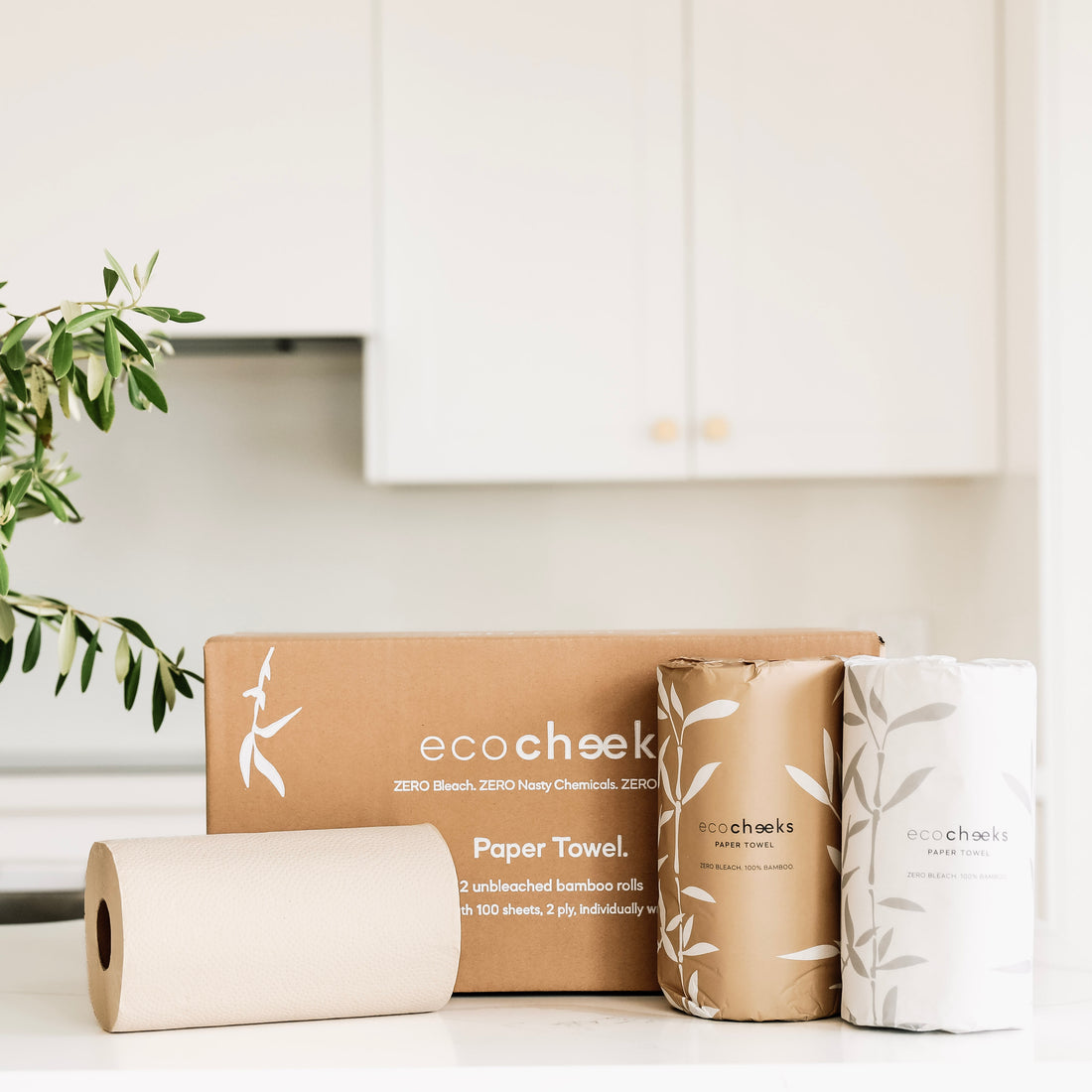
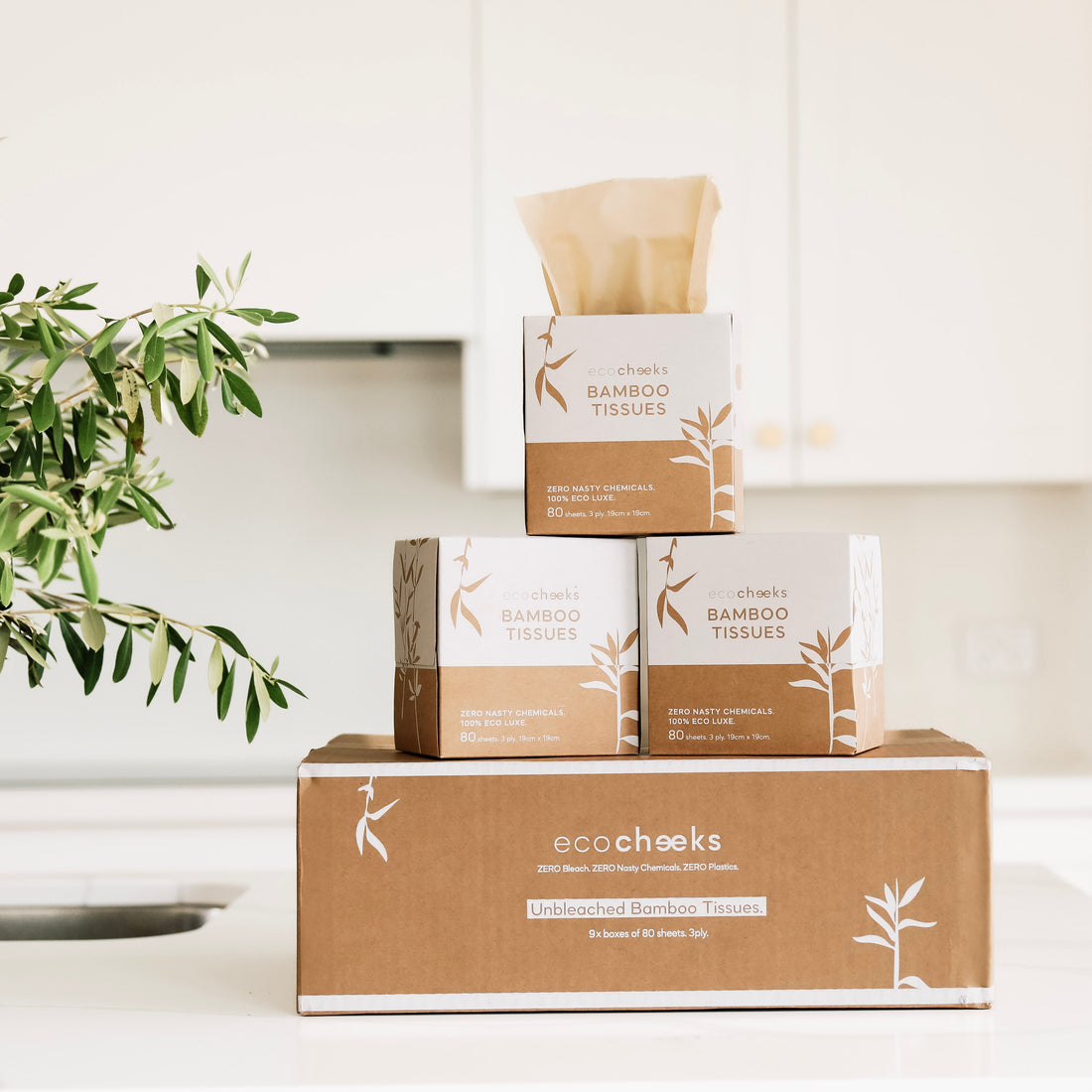
At Eco Cheeks, our bamboo tissue paper products might not carry an "organic" stamp, but they're unbleached, free from chlorine, formaldehyde, fragrances, and PFAS, and made from a raw material that didn't need a chemical industry to grow in the first place.
How Can I Tell If a Bamboo Product Is Actually Sustainable?
Since "organic" isn't the marker to look for here, here's what to check instead:
-
-
Is it unbleached or bleached with chlorine?
-
Is it free from added fragrances, dyes, and PFAS ("forever chemicals")?
-
Is the packaging plastic-free?
-
Does the brand explain where and how the bamboo is grown and processed?
-
A brand that's upfront about all of the above is doing more for sustainability than a certified-organic stamp ever could on its own.
Bamboo Is Still the Way to Go
The absence of an "organic" label doesn't take anything away from what bamboo brings to the table: fast growth, minimal water, zero pesticides, and a genuinely lower environmental footprint than traditional tree-based paper products.
At Eco Cheeks, we're not chasing a label. We're just making sure every roll is as kind to your body and the planet as bamboo itself already is, no harmful chemicals, no plastic packaging, no nasty surprises.