
We’ve all had that cold sweat moment. You’re in a public cubicle, or maybe at a friend’s place for the first time. You reach for the roll and… nothing. Just a lonely cardboard tube staring back at you. Toilet paper is one of those everyday essentials we barely think about, until it suddenly disappears.
In Australia, our relationship with toilet paper went from a quiet household staple to a national fixation during the Great Toilet Paper Shortage of 2020. But long before supermarket shelves were stripped bare, Australians were getting by with far less, and a lot more creativity.
The history of Australian toilet paper is a surprisingly wild ride. It’s a story of survival, questionable design choices (yes, 1970s orange rolls, we remember you), and a growing realisation that what we use in our most private moments has a real impact on the planet.
Let’s take a fun trip through history, from the great outdoors to the soft, sustainable bamboo rolls we’re loving today.
The Early Days: Nature’s Essentials
Long before European settlement, Indigenous Australians lived sustainably with the land for tens of thousands of years. Toilet paper wasn’t something you bought; it was whatever nature provided.
Depending on the region, this included:
-
-
Soft leaves such as gum leaves and other native foliage
-
Water from nearby creeks or rivers
-
Moss and grasses
-
Shells in coastal areas
-
When European settlers arrived, they brought new habits, but not much in the way of comfort. In remote settlements and on the goldfields, anything within reach was fair game. Old newspapers, and yes, the legendary gum leaf, became everyday solutions. While gum leaves might smell pleasant, anyone who has tried to use a dry one knows they are far from cloud-like.
By today’s standards, these methods sound uncomfortable, but they were practical, biodegradable, and readily available. In many ways, they were more sustainable than what followed.
When Industry Reached the Dunny
It wasn’t until the late 1800s that toilet paper began appearing in Australia, imported mainly from Europe and the United States. Early versions were often marketed as “medicated paper” and sold as flat sheets in boxes. Some were infused with aloe, others with substances like tar, which does not sound soothing at all.
These products were considered a luxury, and it would take decades before toilet paper became a standard feature in Australian homes.
The Rise of Locally Made Toilet Paper
By the early 1900s, Australia began producing its own toilet paper. These early Australian toilet paper products were made almost entirely from wood pulp, reflecting the industrial priorities of the time. Comfort was still basic, and there are stories of the occasional splinter, which gives a whole new meaning to “roughing it”.
Local manufacturing brought:
-
-
Lower costs for households
-
Wider availability across cities and regional areas
-
The beginning of the competition between Australian brands
-
Convenience won out, and toilet paper quickly became a household essential.
The Rainbow Era: When Toilet Paper Had a Colour Palette
If you grew up in an Aussie home during the 1970s or 1980s, you probably remember coloured toilet paper. Deep oranges, dusty pinks, baby blues, and even soft apricot. Matching your toilet paper to your bathroom tiles was considered the height of style.
Unfortunately, those cheerful colours came from synthetic dyes. Over time, concerns about skin irritation and environmental impact saw coloured toilet paper quietly disappear. Fashion moved on, and so did our bums.
The Whitening Obsession and Its Hidden Cost
By the 1990s, bright white toilet paper became the gold standard. Marketing convinced us that whiter meant cleaner. To achieve that look, manufacturers relied heavily on bleaching processes, often using chlorine.
This didn’t just require large amounts of water; it also released harmful chemicals into waterways. Forests were cleared, pulp was heavily treated, and all of it was used once and flushed away. The environmental cost was becoming harder to ignore.
The Toilet Paper Shortage That Changed How We Think
No history of Australian toilet paper would be complete without 2020. During the COVID-19 pandemic, panic buying swept the country and toilet paper became one of the most hoarded items. It was a stressful and uncertain time, but it did spark an important conversation about where our essentials come from. The shortage highlighted:
-
-
How reliant Australia was on long supply chains
-
The vulnerability of imported products
-
The importance of local manufacturing and reliable distribution
-
For many Australians, it was a wake-up call that toilet paper is not as simple as it seems.
The Future: Why Australia Is Embracing Bamboo
Today, we’re seeing a shift back to simpler, smarter choices, with a modern, eco-friendly twist. Australia has become a leading market for bamboo toilet paper, and it’s easy to see why. Australian toilet paper buyers now prioritise:
-
-
Renewable materials like bamboo
-
Low-impact manufacturing
-
No nasty chemicals
-
Plastic-free delivery
-
Ethical, transparent brands
-
We’ve realised we don’t need to destroy forests or bleach paper bright white to stay clean.
From Gum Leaves to Bamboo, We’ve Come a Long Way
The history of toilet paper in Australia reflects changing values as much as changing habits. From natural materials to mass production, and now back toward sustainability, our bathroom routines tell a bigger story.
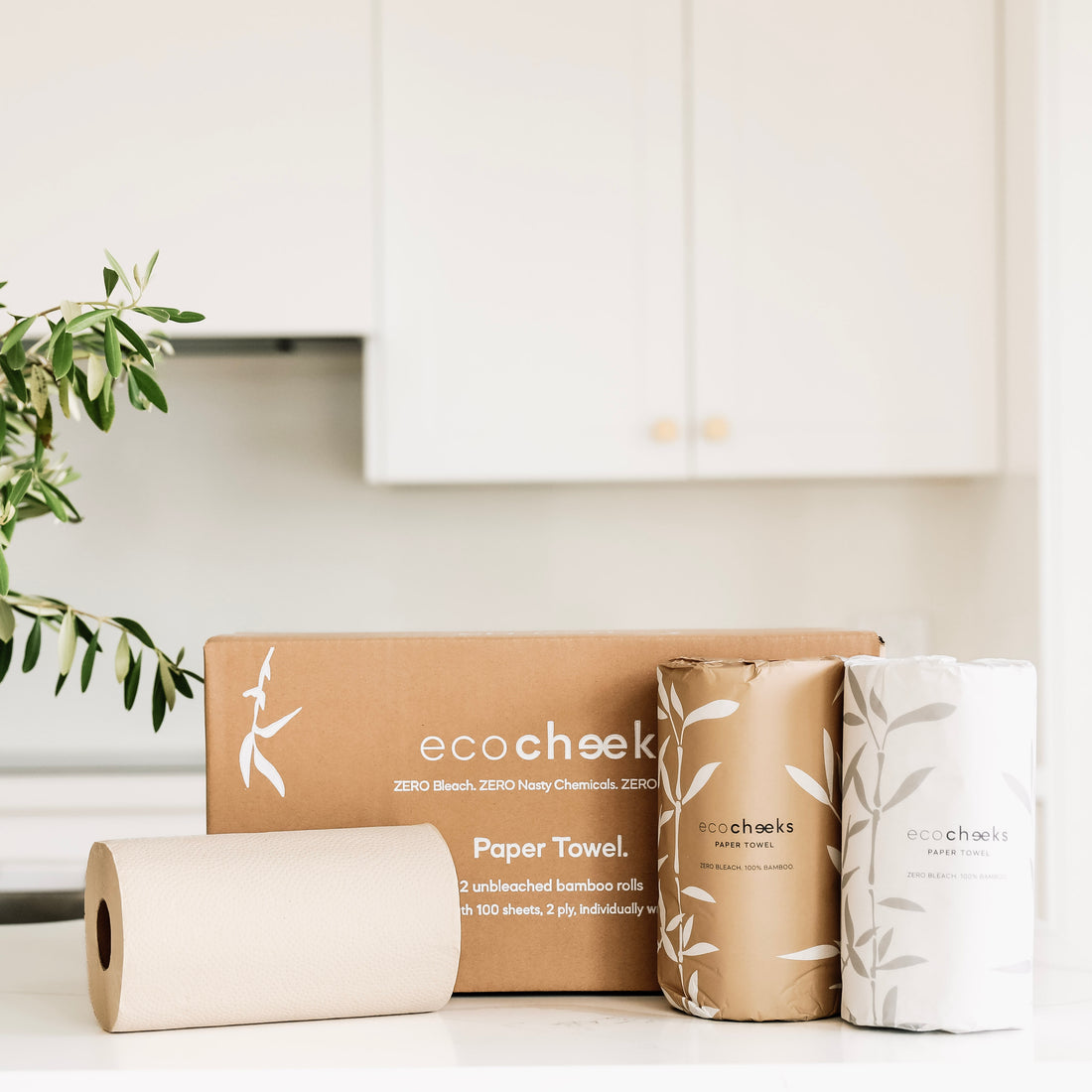
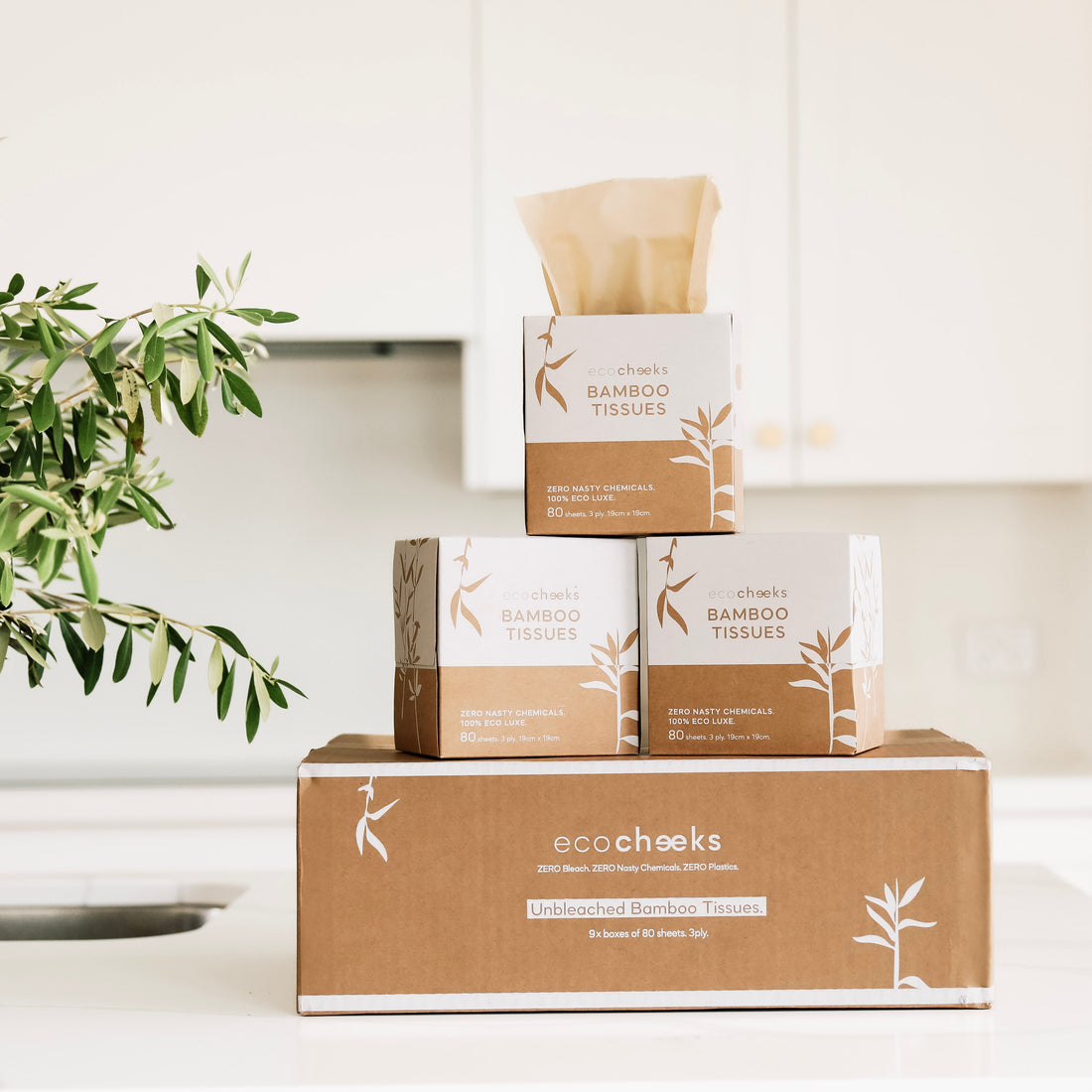
At Eco Cheeks, we’re proud to be part of this next chapter. Our 100% bamboo toilet paper is unbleached, plastic-free, and seriously soft. It’s a no-nasties essential that helps you run a greener household without even thinking about it.
Because if history has taught us anything, it’s that we’re much better off with a soft, sustainable bamboo roll than a handful of dry leaves.